Tuesday, May 26, 2009

Plan for "Cleanest" Power Plant Abandoned Near Los Angeles


"abandoned due to opposition by environmentalists"
Great job, L.A!!!!!

You not only saved your community from the risks - you saved tax-payer dollars!
I hope you help with others who are fighting to keep their families and communities safe!

To read the entire article click here, parts of it are listed below.
"A plan to build the "cleanest and greenest" power plant near Los Angeles has been abandoned due to opposition by environmentalists, according to a newspaper report on Monday.

"The 1-billion-dollar project in Carson, a South Los Angeles suburb, would have been an early test of carbon-capture technology, in which carbon dioxide emissions are permanently stored underground, according to local newspaper the Daily Breeze.

It was billed as the "cleanest and greenest" power plant when plans for construction were announced in 2006.

But the companies involved in the project said they encountered opposition from environmentalists. The project exposed a rift between some environmentalists who say that carbon-capture technology poses risks to surrounding communities and those who say it is essential to mitigating climate change."


Carbon sequestration: bury the idea, not the CO2

I'm a long way from the Dutch town of Barendrecht but I feel the same way.........Not under MY backyard.....and I'll go the extra mile and say..........OR YOURS!!!

Carbon Capture and Storage does ONE THING successfully - it allows the Coal Industry to keep on burning coal..................that is the real goal, isn't it now?

________________________________________________________________


Dutch Stand Up to Shell’s Plan to Bury CO2 (Update1)
( link to the complete story is included below)

By Fred Pals

April 20 (Bloomberg) -- The Dutch town of Barendrecht has a message for Royal Dutch Shell Plc: Not under my backyard.

The oil company and the Netherlands government intend to build the first of a new generation of carbon-dioxide storage facilities in two depleted natural-gas fields in Barendrecht. The plan is to capture emissions from a gasification hydrogen plant at Shell’s nearby Pernis refinery and then store the CO2 more than a mile below area homes, preventing the greenhouse gas from reaching the air and harming the environment.

“I don’t think this is the solution to the CO2 problem,” said 53-year-old resident Gerard van Gils. “Why do a project in a residential area and not offshore? The atomic bomb wasn’t tested under Manhattan. To me this means: Not under my backyard.”

Barendrechters like Van Gils say they’re concerned about safety and a possible drop in property values. Governments around the world want energy companies to store CO2 instead of releasing it, to combat global warming. The Netherlands aims to bury 30 million tons of CO2 by 2030 and is spending about 750 million euros ($980 million) in three years on CO2 reduction.

Carbon capture and storage, or CCS, involves extracting CO2 from power generation and industrial projects, compressing it and injecting it into depleted oil and gas fields or saline aquifers. The technology would allow prolonged use of coal for electricity generation while reducing greenhouse pollution.


Environmental Assessment

An independent environmental assessment this month will determine whether the project at Barendrecht, on the outskirts of Rotterdam, addresses all concerns. The city council, which so far has opposed the plan, will deliver a final decision by June 29. That can still be overruled by the Dutch government, which commissioned the project.

In its preliminary finding, the council said public support was “lacking” and asked Environment Minister Jacqueline Cramer to halt the venture.

“This project is an experiment, and we don’t think that it is a good idea to have that in a densely populated area,” Simon Zuurbier, alderman of the city council, said in an interview. “It would be better to do it somewhere else.”

Test Projects

The Barendrecht project is one of two Dutch prototypes for a pair of larger facilities that must be up and running by 2015 for the country to cut emissions by 30 percent in 2020.

The second prototype is being developed in the southern province of Limburg, where a unit of French utility GDF Suez SA and Dutch chemical company Royal DSM NV plan to store at least 2 millions tons of CO2 in the next decade.

Civic opposition to the Barendrecht facility may make the project a test case for similar projects elsewhere in Europe. The European Union plans to make 9 billion euros available for CCS pilot projects near power plants in the 27-nation bloc to prove the commercial viability of the technology.

Shell plans to store 400,000 tons of CO2 a year at Barendrecht, the equivalent to 5.4 million euros worth of European Union carbon dioxide permits, based on the April 17 spot price of 13.40 euros a ton on the BlueNext exchange.

Shell Netherlands CEO Peter de Wit said the Barendrecht project is the quickest way to gain experience for large-scale CO2 storage in the Netherlands.

International Efforts

“Given its geologic resources and its position as a gas supplier, it is commendable that the Netherlands take a leadership role in trying to build global consensus on a liability and regulatory solution for CCS,” the IEA said in a February review of the Dutch energy policy.

In Barendrecht, Van Gils isn’t so sure. He said he’s concerned that his apartment, which is next to an elementary school and above the perimeter of the proposed storage site, may be prone to gas leaks or shifting earth. More than a 1,000 people showed up to question the government and Shell on the project at town hall meetings in February, according to the city council’s Web site.

“The vast majority doesn’t want this,” Van Gils said. “It has to take something to get people in Barendrecht out of their homes and attend such a meeting.”

Last Updated: April 20, 2009 Read the complete link - The link to the above article is here

A REGIONAL CONCEPT FOR A CO2 PIPELINE NETWORK

https://www.purdue.edu/discoverypark/energy/pdfs/cctr/presentations/Lambeck-CCTR-June08.pdf

Mr. Klaus Lambeck
Public Utilities Company of Ohio is a member of the National Coal Council - link below.

http://www.nationalcoalcouncil.org/

Monday, May 25, 2009

Memorial Day in the Darke/Green region

** A time to remember all those who have passed on from friends and family.

** A time to remember all those who have died for the ideals of this great country.

And for members of the Citizens against CO2 Sequestration

** A time to remember all those who died in our coal mines - and now a much greater

group has been added - those in the dangerous mines fueling the gadget driven

industrial economies of India and China (combined far exceeds US in CO2 and

toxic emissions).

**And for all those in this country and world-wide who died breathing the unnecessary
toxic-Beijing smog generated by our coal-fueled industries.

**And for ourselves, that leaders will recognize that we deserve the same consideration
that athletes received when China cut back on its coal fired industries prior to the Olympic
games.

Help us appreciate that by “fighting CO2 Sequestration” in the Darke/Green region, we by
serendipity have joined the world in a fight for a healthier safer environment for all mankind.

Charles E. Reier, MD
Rebecca A. Reier
May 25, 2009

Saturday, May 23, 2009

WARNING - CO2 Sequestration Danger - Citizen CALL TO ACTION

Carbon Dioxide Storage in Coal Seams

WARNING

CARBON DIOXIDE SEQUESTRATION

AN EXPERIMENT WITH CONSEQUENCES


Carbon Dioxide Storage in Coal Seams

  • Two major aquifers will be at risk, threatening our water
  • Injection at high pressure can cause earthquakes
  • If released in sudden amounts can cause death
  • If released in slow amounts can damage nutrient-rich soil
  • Turns into an acidic solvent that corrodes pipelines
  • No one knows how far it can travel once injected
  • Residents can be burdened with unfair liability issues
  • Will cost $93 million over a ten-year period


Carbon Dioxide Storage in Coal Seams

TAKE ACTION


STOP IT NOW!
Carbon Dioxide Storage in Coal Seams


CONCERNED CITIZENS ACTION MEETING


PUBLIC IS URGED TO ATTEND


Christian Lighthouse Center’s

All Seasons Place


5256 Sebring-Warner Road Greenville, OH – Darke Co.


When: Monday, June 29, 2009


7:00 p.m.


SPEAKERS:

Kerwin Olson,

Citizens Action of Indiana

Dangers of CO2


Kathleen Boutis, President

Green Coalition of Western Ohio


Sponsored by: Citizens Against CO2 Sequestration


citizensagainstco2sequestration.blogspot.com

Carbon Dioxide Storage in Coal SeamsCarbon Dioxide Storage in Coal Seams

Lessons learned by US DOE in Shadyside, OH CO2 Sequestration experiment


"US DOE field test completed
Storage, May 21 2009 (Carbon Capture Journal)

- The U.S. Department of Energy's (DOE) Midwest Regional Carbon Sequestration Partnership has completed a preliminary geologic characterization and sequestration field test at FirstEnergy’s R. E. Burger Plant near Shadyside, Ohio.

The project provided significant geologic understanding and "lessons learned" from a region of the Appalachian Basin with few existing deep well penetrations for geologic characterization, said the DOE."

Read the entire article by clicking here.............

In response to passage of the "American Clean Energy and Security Act" by the House Energy and Commerce Committee


Joint statement by:

Greenpeace USA * Friends of the Earth * Public Citizen * Citizens Action Coalition of Indiana *Citizen Power * Center for Biological Diversity * TURN-The Utility Reform Network * Sustainable Energy & Economy Network * Green Delaware * Massachusetts Environmental Energy Alliance * Massachusetts Forest Watch * Coal Moratorium Now!

Washington-In response to passage of the "American Clean Energy and Security

Act" by the House Energy and Commerce Committee, a coalition of environmental, legal, consumer, and community advocacy groups released the following joint statement:

"While a week of debate failed to adequately strengthen protections for consumers, communities, and the climate in this bill, it erased all doubt of who will benefit most from it: Big Business. Despite the best efforts of Chairman Waxman, the decision-making process was co-opted by oil and coal lobbyists determined to sustain our addiction to dirty fossil fuels, even as the country stands ready to rebuild our economy and clean up the environment with real clean energy. The resulting bill reflects the triumph of politics over science, and the triumph of industry influence over the public interest.

"Regrettably, we cannot support this legislation unless and until it is substantially strengthened. The lives and livelihoods of 7 billion people worldwide will be affected by America 's response to the climate crisis. The response embodied in today's bill is not only inadequate it is counterproductive.

"As passed through the Energy & Commerce Committee, the American Clean

Energy and Security Act sets targets for reducing pollution that are far weaker than science says is necessary to avoid catastrophic climate change. The targets are far less ambitious than what is achievable with already existing technology. They are further undermined by massive loopholes that could allow the most polluting industries to avoid real emission reductions until 2027. Rather than provide relief and support to consumers, the bill showers polluting industries with hundreds of billions of dollars in free allowances and direct subsidies that will slow renewable energy development and lock in a new generation of dirty coal-fired power plants. At the same time, the bill would remove the President's authority to address global warming pollution using laws already on the books.

"The international community cannot solve global warming without real leadership from the United States . We urge the President to demonstrate that leadership by working with Congressional leaders to craft a real, science-based response to the challenge of global warming and by immediately exercising his substantial authority to regulate global warming emissions under existing laws."

Friday, May 22, 2009

Vulnerability of Drinking Water and Geosequestration (CO2 Sequestration)


Carbon Capture and Sequestration is also known as CO2 sequestration and Geosequestration... in this information supplied by the US EPA, they refer to it as "GS".


All this information came from the U S EPA
Vulnerability Evaluation Framework for Geologic Sequestration of Carbon Dioxide
July 10, 2008 -

Click on the above title to be taken to the complete publication.....lots to read there as you form your own opinion regarding CO2 sequestration... would you want it in YOUR COMMUNITY?

Neither do I - NIMBY - OR YOURS!

"5.2.3 Pressure-Induced Physical Effects
Injecting CO₂ into geologic formations will in most cases cause subsurface changes in pressure. As
discussed above, induced fracturing and fault reactivation can occur if injection pressure exceeds fracture pressures, which may in turn result in the opening of fl uid migration pathways. If pressures are great enough, they could in extreme cases cause earthquakes (Healey et al., 1968).

There may be greater uncertainty about evaluating pressure effects in GS systems when examining the potential for pressure-induced regional scale impacts that do not involve fracturing or faulting.

As discussed in Chapter 4, pressure changes in the injection zone could cause regional impacts on overlying aquifer systems, including changes in groundwater fl ow directions and water table levels. These may result in alterations in the distribution and fl uxes of groundwater. This could in turn have other impacts, for example, changing the quantity of groundwater that is available for municipal drinking water supplies. There also could be pressure-induced migration of brines and other fluids through the pore structure of overlying formations into groundwater receptors, which may impact water quality. Furthermore, pressure-induced fluid displacement could result in the release of brine at locations where injection zone formations outcrop at the land surface. Regional pressure effects have been the focus of relatively few studies, and uncertainties and vulnerabilities associated with this subject should be addressed through additional research."

Did you know the bailout package included this?

This great clip from our friends at treehugger.com


By ALEXANDRA SUKHOMLINOVA, News-Record Writer
(Thank you Alexandra - the link to her story is here )
Published: Sunday, October 12, 2008 12:19 AM MDT

Buried in the $700 billion bailout package passed by Congress last week was a small item of great consequences for Wyoming. So far, few people, even those in the energy industry, know that the Economic Stabilization Act included a tax credit for carbon sequestration and using carbon dioxide in pumping oil and natural gas ” things that could continue to keep Wyoming’s economy strong and deal with the sticky issue of what happens to the byproduct of burning fossil
fuels.

“It’s a wonderful financial opportunity to people,” said Rep. Tom Lubnau, R-Gillette, who helped draft two bills on carbon sequestration that were passed by the state Legislature earlier this year. “I think it was buried in the legislation and nobody knows except for the industry, but there is lots and lots of interest.”

Wednesday, May 20, 2009

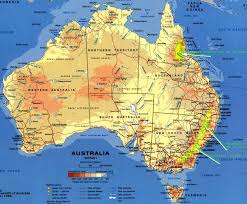
Australian Government reports highlight CCS dangers


From our friends in the land down under.......... a list of dangers associated with carbon sequestration (CCS) - for your reference, the link to the web site is here

Just a few of them......


  1. The cost of monitoring reservoirs will have to be borne by someone. Corporations have already suggested that the public pay for monitoring.
  2. It is unclear what remedial work can be done, if any, should carbon die-oxide leak from a reservoir.
  3. Many trials of CCS technology have leaked and some projects factor in a leak factor per year.
  4. Reservoirs of sequestered carbon die-oxide must be monitored forever.

Quoting the IPCC report. http://www.ipcc.ch/activity/srccs/index.htm emphasis added. Comment;
Hydrocarbon pipelines do leak, and CO2 is a smaller molecule than most of the hydrocarbons, giving it a greater tendency to leak. The ‘very important’ role of monitoring would have to continue forever.


"In the case of CO2 injection into deep saline formations, there is also the small possibility that displaced brine could contaminate groundwater. The contamination of freshwater aquifers could be caused by vertical migration of stored CO2. Buoyancy forces, caused by the density difference between the injected supercritical CO2 and the formation waters, will tend to drive stored CO2 upward. If the formation is not a geologic trap or not adequately sealed by an impermeable caprock, CO2 could leak from the storage reservoir. There is then the potential for the vertically migrating CO2 to dissolve in shallow aquifer waters, form carbonic acid and lower the aquifer water pH, which in turn could result in the mobilization of heavy metals and/or the leaching of nutrients. In a worst-case scenario, the contamination of a freshwater aquifer could exclude its use for drinking or irrigation supplies. CO2 migration within the subsurface also has the potential to contaminate energy and mineral resources as well as pose an occupational safety hazard for mining and exploration activities. “

"Slow, long-term release of CO2 to the atmosphere (i.e. reservoir leakage)

Reduction in the net climate change mitigation achieved through CCS, resulting in worse than expected global warming

Sudden large-scale release of CO2 to the atmosphere

Reduction in the net climate change mitigation achieved through CCS, resulting in worse than expected global warming

Asphyxiation of humans, animals and plants

Escape of CO2 to shallow groundwater

Water acidification, mobilised toxic metals, leached nutrients (Bruant et al. 2002)

Displacement of deep brine upward

Contamination of potable water sources"

There is considerably more information on their web page.......be sure to visit it to read the article article and follow links.

http://www.aboutcarbon.com.au/Display.aspx?tabid=3300