Showing posts with label Geosequestration. Show all posts

Friday, July 24, 2009

CO2 Sequestration - A Ticking Time Bomb?


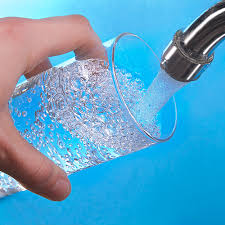
Many thanks to the unknown photographer who took, tweaked and sent this photo -

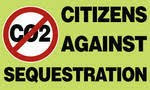
Darke County Ohio is speaking out AGAINST CO2 - please see the Daily Advocate and its CO2 blog for many related articles.


Please see our web site to order "No CO2 pins, T-shirts, Yard Signs or Car Window Clings"
Look for us downtown during the Annie Oakley Parade

Well Construction and Mechanical Integrity Testing

Synthesis, Evaluation and Assessment of
USEPA Technical Workshop on Geosequestration:
Well Construction and Mechanical Integrity Testing
Jerry Thornhill, P.G.
Consultant to Shaw Environmental, Inc.
Randall Ross, Ph.D.
Steven Acree, P.G.

National Risk Management Research Laboratory
Prepared under contract to Shaw Environmental, Inc.
Contract Number 68-C-03-097

www.regulations.gov/search/redirect.jsp?objectId...disposition..

EXECUTIVE SUMMARY
Injection and monitoring wells employed for the geologic sequestration of CO2 may be
required to operate for timescales that go beyond the operating lifespan traditionally
considered by the oil and gas industry. Lessons learned from pilot studies and
conventional injection practices may provide some general guidance for the geologic
sequestration of CO2. However, the special problems related to the unique properties of
supercritical CO2 and proposed massive injection volumes may ultimately require the
development of new materials and tools to reduce the risk of failure and, possibly, new
regulations to manage the risks.
Several key issues regarding well construction and MIT with respect to geological
sequestration of CO2 were identified during this workshop.
Well Completion
Although well integrity is the cornerstone for successful injection well projects, an
integral part of a successful project is the initial well completion program (i.e., drilling
the hole, setting and cementing casing, setting tubing, etc.). This is vital to the successful
operation of any injection well project. The choice of casing and tubing material, cement
type, amount, and proper emplacement is the starting point for the success of the injection
well.

During the workshop, it was stated that,
“Wellbore integrity problems do exist in oil and gas operations and are often due
to cementing practices.”

This statement was apparently based on information from meetings of the International
Energy Agency (IEA) Greenhouse Gas R&D Programme. Key findings from the IEA
March 2006 meeting (IEA, 2006) included, “Well integrity may be a current issue within the oil and gas industry. A detailed study on production wells in the Gulf of Mexico indicated that up to 60% of wells had casing pressure problems, which could indicate that the integrity of the wells
had been compromised.

Experience from the Permian basin in the USA indicated that when fields were changed over to CO2 floods that significant remedial work was needed to pull and re-cement wells that had not seen exposure to CO2. It was considered that many of the problems in both the Gulf of Mexico and the Permian basin resulted from poor well completions at the outset.”

An injection well must be completed in such a manner that underground sources of
drinking water (USDWs) are protected initially, during long-term injection operations,
and following the period of injection. This includes well completion to provide protection
of ground water from naturally occurring salt-water zones; well completion to keep the
injectate in the proposed injection zone and capability to detect any equipment failure
resulting from such things as corrosion, inadequate or unsuccessful cement emplacement,
channeling around an initially successful cement sheath, or mechanical failure.

A specific concern of the participants in the Well Construction breakout session was the
casing metallurgy/coatings in view of the corrosive nature of the CO2. This is especially
critical for the long string casing, tubing and packers that would be in contact with the
injectate.

Participants in the Well Construction breakout section generally felt that the
Underground Injection Control (UIC) Class I requirements “may” be sufficient for CO2
geologic sequestration. It is recommended that Class I requirements be the minimum
standard considered for CO2 injection.

It has been determined that Portland-based cements react with CO2, leading to cement
degradation. Research has indicated that interaction between cement and CO2 follows a
three-step process - carbonic acid diffusion, dissolution/carbonation, and leaching. This
generally leads to loss of density and strength and an increase in porosity.

From the Los Alamos National Laboratory
Key issues identified by the Network include:
• Wellbore integrity problems exist in oil and gas operations and are often related to
cementing practices.
• Research is needed on reactivity of CO2 and cement to reconcile effects of key
variables.
• Methods for determining performance of new CO2-resistant cements are needed.
• Corrosion of tubulars and casing can be more rapid than cement degradation.
• More sensitive field monitoring tools for diagnosing well integrity are needed.
• Numerical models of wellbore geochemistry and geomechanics are needed.
• Numerical models incorporating realistic well permeability distributions are
needed to evaluate leakage potential.
• Evaluation of existing fields with long term CO2 exposure are needed to develop
more effective methods for logging/monitoring for evaluating mechanical
integrity.
• Mining of existing data from private companies and regulatory authorities should
be a priority for development of a statistical basis for evaluating wellbore
performance.


CO2-Cement Interaction: From the Lab to the Well
Matteo Loizzo, Schlumberger Carbon Services Engineering
The presentation summarized research on CO2/cement reactions and the development of CO2-resistant cement. The interaction between Portland cement and CO2 is a 3-step process:
• Carbonic acid diffusion,
• Cement (portlandite) dissolution and carbonate precipitation, and
• Leaching (calcium carbonate dissolution).
Cement sheath defects would cause acceleration of the degradation process. Potential
defects include:
• Inadequate placement of cement resulting in channels or mud films,
• Channels caused by gas migration during cement hydration,
• Cracks caused by cement failure in compression/traction, and
• Microannuli caused by lack of bonding at the interfaces with casing and/or rock.

Research is being conducted on a CO2-resistant cement formulation. It was concluded that sound cement design is required, both for the placement and post-placement phases.

Selecting Sites for Geological Sequestration: Wellbore Integrity and Other Criteria Jason Heath, New Mexico Institute of Mining and Technology
The presenter, representing the Southwest Carbon Sequestration Partnership, described the efforts of the Partnership regarding selection of sites for geological sequestration. One of the key aspects for site selection is the identification of the best sink for each CO2 source.The presenter provided an example of the well integrity analysis at a test site, the Aneth Unit in southern Utah, where well construction deficiencies may potentially affect a pilot test of CO2 injection.
Analysis of well construction deficiencies included:
• Calculation of the top of cement,
• Temperature and cement bond logs, and
• Information on the depth of surface or intermediate casing.
Wells vulnerable to interformational migration of fluids were identified by the screening analysis described above. However, no monitoring has been performed in wells identified as vulnerable.


Well Construction
• Industry has developed recommended practices and protocols for well
construction. However, much of the research upon which the protocols are based
is confidential.
• Experience from EOR and acid gas operations provides a good working basis for
well construction.
• Pilot tests with real-world volumes of CO2 are needed.
• Performance-based construction standards may be appropriate.
Research Need: Development of lower cost materials that perform as well as high-cost materials.

Casing
• Abandonment procedures may need to be more stringent for geological
sequestration.
• Casing specifications depend on possible impurities, formation brine, pressure,
temperature, and operational conditions.
• Casing options include chrome tubing, expandable tubing, titanium casing,
fiberglass casing, and inhibited packer fluid for additional protection.
Research Need: Study the impacts of injection at varying depths.
Cementing
• Cement specifications depend on CO2 impurities; formation brine; and pressure,
temperature, and operational conditions.
• Cement should run the entire length of the wellbore.
Research Need: Alternative (non-Portland) cements.


The research needs determined from this group primarily centered on a review of
laboratory, field, and modeling studies concerning:

• Cement-related microannuli self-enhancing (enlarging) vs. self-healing (sealing),
that have been conducted by the industry,
• Impact of CO2 phase changes on mechanical integrity testing of wells,
• Impact of injectate impurities on the mechanical integrity of wells,
• MIT failure rates for new vs old wells,
• The phenomenon of a cold injection fluid opening up or enlarging gaps within the well system,
• Impact of large temperature differentials between injectate and well system/formation on
pressure tests,
• Monitoring methods/MITs that could detect rates and volumes of fluid movement along the
casing, and
• Time frames of MI changes and necessary MIT frequency.


Mr. Kobelski noted that EPA is currently assessing options for a management framework for
CO2 injection for the purposes of GS. GS presents many technical challenges that go beyond
those associated with CO2 injection for enhanced oil and gas recovery (EOR/EGR). For
example, GS will involve a variety of geologic settings apart from oil and gas reservoirs (e.g.,
saline aquifers and unmineable coal seams). In addition, the CO2 from coal-fired power plants will contain impurities (i.e., sulfur and nitrogen oxides, and metals such as mercury) that are not typically found in the CO2 used in EOR/EGR operations, and GS will involve significantly greater volumes and longer storage times.


Schlumberger Carbon Services - Schlumberger Public
CO2 reaction effects on well integrity
• Carbonation
• Matrix reacts: Portlandite/CSH → Calcite
•Water release
• At an early stage, may affect marginally matrix permeability (10-4→10-3 mD)
• May lead to mechanical instability (Calcite molar volume increase) •
¾” in 7-10 months, 1 m in 2000 years
•CO2 diffusion in water: ¾” in 3 days, 1 m in 20 years
• Leaching
• Strong dependency on local Ca2+ concentration gradient
Cement effectively dissolves


Cement sheath defects – effects on scale
• Fluid flow vs. matrix diffusion
• Preferential path of fluid flow bridges the scales
• Issue not limited to CO2: 15%-20% of wells may show hydraulic communication to surface
• Carbonation healing/plugging may be effective only at small scales
• Karst
• Positive feedback effect from enhanced leaching on defect walls

Assuring cement integrity over the well life
• Risk factors and scales
• Casing corrosion
• Leakage to shallower formations or to surface
• Multiple layers of risk mitigation
• Especially when repair is difficult
• Cement system selection and optimization
• Minimize or eliminate cement sheath defects
• Minimize or eliminate cement degradation
•Not necessarily cement reaction!


Well Construction: Potential Effects on Pilot Test
Potential impact of construction deficiencies:
Construction deficiencies could “provide a potential pathway for fluid migration between aquifers where there exists a differential in hydraulic head between aquifers.”
“Because the De Chelly aquifer hydraulic head exceeds the Navajo aquifer head in much of the Aneth Field area, saline water from the De Chelly Aquifer could potentially migrate upward into the Navajo aquifer through the partially cemented wellbores.”

How “risky” for CO2 migration are the wells that are vulnerable to communication between the Upper Paleozoic Aquifer and the Navajo Aquifer?
We think that the integrity and reactivity of the cement at/above/below the target reservoir (e.g., at the Paradox Formation in this case) is very important. If CO2 can leak through these “vulnerable” cement zones (e.g., the Paradox Formation here), then superjacent groundwater reservoirs may be impacted. Well cements must be sampled and characterized, and the conditions recorded and implemented in associated reservoir models for quantifying potential risk.

Notes about mechanical integrity testing:
The current portfolio of Regional Partnership pilot tests are small enough, in terms of injection rates, that special mechanical integrity testing is not necessary. Only “routine” mechanical testing is being done for these tests.

For Phase III, which will involve injection of over 1,000,000 tons/year in relatively few wells, plans are in place to include in situ tiltmeters and strain gauges (San Juan Basin). Water
injection pressure transient tests will be carried out prior to CO2 injection to characterize state-of-stress and response.

Monday, July 20, 2009

The IMPACT OF Geosequestration on WATER SUPPLIES


April 17, 2009

America's Climate Choices
The National Academies
500 5th St. NW, W603
Washington, DC 20001

RE: Summary of Submission to the Panel on Limiting the Magnitude of Future
Climate Change

Dear Committee Members:

The American Water Works Association (AWWA), the Association of Metropolitan
Water Agencies (AMWA) and the Water Research Foundation (Foundation) are
submitting these joint comments to the America's Climate Choices Panel on Limiting the
Magnitude of Future Climate Change. AMWA and AWWA together represent drinking
water utilities of all sizes that serve more than 90% of the U.S. population. The
Foundation sponsors research to enable water utilities to provide safe and affordable
drinking water to consumers. In 2008 the Foundation established the Climate Change
Strategic Initiative – a research program focused on impacts of climate change on water
supplies.

AWWA, AMWA and the Foundation are very concerned with the effects of climate
change on water resources as many of the most critical impacts of global climate
change will manifest themselves through the hydrologic system. Because the exact
effects of climate change on water resources are uncertain and will vary by region, the
drinking water, wastewater, flood management, and stormwater utilities responsible for
managing water resources for local communities face daunting challenges. These
water utilities are already preparing to mitigate, adapt and plan for climate change in the
midst of the uncertainties about the potential ranges of climate change impacts.

This joint letter summarizes the three documents we are submitting for consideration
during the study process. The documents include:
 Comments on the Sub-Questions: We have reviewed the final four key
questions to be addressed by the Committee and provided responses to each.
The responses include suggested short and long-term actions and technological
advances that can help the water sector address its needs related to the impacts
of climate change on water resources. We submit these suggestions for the
Committee to consider as recommended future actions.

The Authoritative Resource on Safe WaterSM
 Water Embodied in Bioethanol in the United States: This article, which was
recently published in Environment Science and Technology, addresses the
continually increasing amount of water used during the production of bioethanol
in the United States. The energy sector and the water sector are becoming more
and more interdependent, and the implementation of new climate change
mitigation technologies could have significant impacts on the availability of our
water resources. We submit this article for consideration during the discussion of
limiting the magnitude of climate change.

 Comments developed for EPA on Geologic Carbon Sequestration: In 2008,
AWWA and AMWA developed comments on the Environmental Protection
Agency’s proposed rule on geologic carbon sequestration injection under the
Underground Injection Control Program. These comments are submitted for
consideration because they provide more detail on our specific concerns
regarding the use of carbon sequestration as a large-scale greenhouse gas
mitigation technology.

AWWA, AMWA and the Foundation are also submitting detailed joint comments to each
of the other three panels within the America's Climate Choices Study and to the
Committee on America’s Climate Choices.

Sincerely,
q
Diane VanDe Hei Tom Curtis
Executive Director, AMWA Deputy Executive Director, AWWA
Robert C. Renner
Executive Director, Water Research Foundation

Read the full article with attachments here

Thursday, June 4, 2009

Earthquakes - Potential Side effect of CCS (CO2 sequestration)


There is no time like the present to educate yourself about earthquakes - this link was sent to me and so I am passing it on to our readers in hopes no one ever needs this information

http://quakequizsf.org/

Monday, June 1, 2009

Ecological Impact of Seismic Testing


Before seismic testing can be done they must first get permission from the land owners and a permit from the county. If land owners will not give them permission they often have "Plan B" which will allow them to still do the test but often changes their path.

Published on Wildlands CPR (http://www.wildlandscpr.org)

The number of seismic tests for oil and gas conducted on public lands in the United States is increasing, and this should concern anybody interested in conserving wildlife, plants and vegetation, soil, and the very character of these lands. As domestic oil and natural gas exploration increases, geophysicists seek to map and understand underground deposits that may hold valuable hydrocarbon resources.

Seismic testing is their preferred method, and one result is a proliferation of linear barriers across the landscape Seismic testing evolved from the discovery that when earthquakes occur, it is possible to capture the sound waves created and use the data to map geophysical features that lie underground. Much of what we know about the Earthøs core, mantle, and crust is the result of this discovery, and it follows that man-made seismic, or sound, waves can also be used to map subsurface geologic formations and locate stores of oil and natural gas. However, as seismic tests become more prevalent, there is growing concern about their impacts -- seismic testing requires intensive cross-country travel, often with vehicles that weigh 60,000 to 80,000 pounds.

How Itøs Done

To conduct a test using the preferred Three-dimensional (3-D) seismic method, long cables are first laid along a îreceiver line." Next, dynamite blasts or Thumper trucks (also called vibrasise trucks) are used along a îsource line" to create what is essentially a man-made earthquake, sending energy into the earth. The energy waves bounce off of the subsurface formations and back to the surface where they are captured by îgeophones," which are connected by the receiver lines to a îdoghouse," or data receiving truck. Knowing the frequency at which the energy is created, it is possible to analyze the frequency of the returning waves and create a map of the subsurface area.

An earlier testing method, 2-Dimensional (2-D) seismic, is conducted by placing a receiver line across an area of land, and creating energy along that same line. In other words, the receiver line and the 3-D seismic yields a picture that shows a volume of earth, which is much more valuable. In conducting a 3-D test, a number of receiver lines are placed parallel to each other across a landscape. The lines run at an angle (often perpendicular) to the source line1, in a îbrick pattern." To create the necessary energy, two methods are generally employed. In the vibrasise method, four trucks move in tandem along the source line, stop at a predetermined point, lower a self-contained platform, and vibrate in unison, sending energy into the earth. This is repeated hundreds or thousands of times in the course of one test. If dynamite is used, a drill rig creates a îshot hole" (50-100 feet deep) along the source line, into which a charge is placed. The charge is set off to create energy in what is called the îshot hole" method, and this process is repeated over the entire testing area. In addition to source vehicles, ATVs are also used during each test. These are driven along the receiver lines to troubleshoot problems.

Clearly, seismic testing is a vehicle-intensive process. In order to collect the most valuable data, it is not possible for the source lines to run along existing roads. With both methods (shothole and vibrasise) it is necessary for a number of vehicles to drive cross-country, causing potentially severe ecological impacts.

Under the National Environmental Policy Act (NEPA), federal agencies are required to analyze the potential impacts of proposed activities. In all seismic projects studied for this review, Environmental Assessments (EAs) were conducted, which are less thorough than Environmental Impact Statements (EISs). These documents outline the potential impacts to wildlife, soil, and vegetation, among others, and offer mitigation methods to minimize the effects.

A review of EAs conducted by the Bureau of Land Management (BLM) for projects in the Moab, UT and Green River Basin, WY areas reveals that BLM findings of no significant impact draw largely on anecdotal evidence and do not rely on verified science or cited references. In these EAs, interviews, internal agency documents, and observations from past projects are used to conclude that the impacts from seismic testing will be temporary and non-severe. In contrast, the documented science on linear disturbances like ORVs and roads is quite extensive, and suggests that long-term damage is occurring.

Ecological Impacts

Use of ORVs, for example, destroys habitat and forage for wildlife and disturbs threatened and endangered species. The impacts to soil and vegetation include compaction, which causes erosion and reduced plant growth, as less water is able to penetrate the surface. Ruts may also be caused if vehicles operate when the ground is wet, which can cause even greater problems with compaction and water runoff. The heavy vehicles used in 3-D seismic testing create twotracks that run across the landscape. If these tracks are not eliminated, unauthorized use of recreational ORVs may occur once testing has ended, and the impacts to wildlife, soil, and vegetation will be even more pronounced.

ORV use is known to destroy vegetation that serves as natural soil-protective elements, even after one pass of a vehicle (Wilshire 1983). This impact becomes more significant as the number of trips over an area increases (Payne et al. 1983). In arid regions, ORVs have been found to increase water runoff and erosion (Hinckley et al. 1983), a result of soil compaction and decreases in soil porosity and infiltration capacity (Webb 1983). Impacts were found even when use of such vehicles was slight, and the first passes of a vehicle over a landscape were found to be the most damaging (Iverson et al. 1981). It is estimated that recovery from soil compaction and a natural return to bulk density, strength and infiltration capacity make take a century to occur. In addition, invasive vegetative species were found in compacted areas within a few years, but native species were much slower to return (Webb & Wilshire 1980).

The impacts of roads, seismic lines and other linear disturbances have a number of impacts on wildlife populations, including individual disruption, habitat avoidance, social disruption, habitat disruption or enhancement, direct and indirect mortality, and effects on population. These impacts have received substantial treatment and attention (Jalkotzy, et al. 1997). Studies also show the dramatic effects that roads have on the movement and mortality of wildlife (Forman & Alexander 1998; Trombulak & Frissell 2000), and the balance of this evidence is so strong that policies have been enacted to reduce road densities in national forests to protect wildlife (Hourdequin 2000).

Impacts of seismic testing have been largely ignored. This is starting to change, however, as more attention is paid in areas where the testing is most prevalent, especially Utah and Wyoming. It is important that the lack of understanding and information about the processes and impacts of these projects be solved, and greater public pressure placed on the federal agencies conducting these reviews. Given the documented impacts of ORV use on wildlife, soils, and vegetation, it is imperative that the BLM and other federal agencies pay greater attention to these projects and the effects they are having on our federal lands. It also needs to be determined whether the two-tracks created during seismic testing are used for recreational purposes once testing is completed.

The absence of scientific research on these issues is disturbing, and until more study is done, it is hard to justify that these impacts are short-term and unimportant. One way this might be corrected is to force the BLM to conduct EISs when considering seismic projects, which would result in much greater scrutiny and require a higher threshold of scientific evidence before determining that a project will have no impact.

Footnotes

1. Actual cables are placed along a receiver line, but a source line is a theoretical line along which vibrasise trucks will drive or dynamite blasts will be placed to create the energy necessary.

Tuesday, May 26, 2009

A REGIONAL CONCEPT FOR A CO2 PIPELINE NETWORK

https://www.purdue.edu/discoverypark/energy/pdfs/cctr/presentations/Lambeck-CCTR-June08.pdf

Mr. Klaus Lambeck
Public Utilities Company of Ohio is a member of the National Coal Council - link below.

http://www.nationalcoalcouncil.org/

Friday, May 22, 2009

Vulnerability of Drinking Water and Geosequestration (CO2 Sequestration)


Carbon Capture and Sequestration is also known as CO2 sequestration and Geosequestration... in this information supplied by the US EPA, they refer to it as "GS".


All this information came from the U S EPA
Vulnerability Evaluation Framework for Geologic Sequestration of Carbon Dioxide
July 10, 2008 -

Click on the above title to be taken to the complete publication.....lots to read there as you form your own opinion regarding CO2 sequestration... would you want it in YOUR COMMUNITY?

Neither do I - NIMBY - OR YOURS!

"5.2.3 Pressure-Induced Physical Effects
Injecting CO₂ into geologic formations will in most cases cause subsurface changes in pressure. As
discussed above, induced fracturing and fault reactivation can occur if injection pressure exceeds fracture pressures, which may in turn result in the opening of fl uid migration pathways. If pressures are great enough, they could in extreme cases cause earthquakes (Healey et al., 1968).

There may be greater uncertainty about evaluating pressure effects in GS systems when examining the potential for pressure-induced regional scale impacts that do not involve fracturing or faulting.

As discussed in Chapter 4, pressure changes in the injection zone could cause regional impacts on overlying aquifer systems, including changes in groundwater fl ow directions and water table levels. These may result in alterations in the distribution and fl uxes of groundwater. This could in turn have other impacts, for example, changing the quantity of groundwater that is available for municipal drinking water supplies. There also could be pressure-induced migration of brines and other fluids through the pore structure of overlying formations into groundwater receptors, which may impact water quality. Furthermore, pressure-induced fluid displacement could result in the release of brine at locations where injection zone formations outcrop at the land surface. Regional pressure effects have been the focus of relatively few studies, and uncertainties and vulnerabilities associated with this subject should be addressed through additional research."

Saturday, May 16, 2009

General hazards of carbon dioxide


This information is from the following web site:
http://www.hse.gov.uk/carboncapture/carbondioxide.htm


"At room temperature and ambient pressure CO2 is a colourless, odourless gas that will not support combustion or human life. CO2 has been recognised as a workplace hazard for over a century. It is significantly heavier than air and many fatalities from asphyxiation have resulted from entry into pits, tanks, sumps or cellars where CO2 has accumulated and displaced oxygen.

It is also possible for dangerous levels of CO2 to form out-of-doors in trenches, depressions or valleys. This is particularly likely when the gas is colder than the surrounding air, which may occur following pressurised release.

In 2000, a US Environmental Projection Agency study on CO2 related incidents in fire scenarios reported that since 1975 there were 51 recorded incidents involving the discharge of CO2 fire extinguishing systems resulting in 72 deaths and 145 injuries.
There is no significant inherent human response to CO2 that could be useful as a detection mechanism. Human response to hydrogen sulphide by smell occurs at very low (ppm) concentrations, similarly with ammonia and sulphur dioxide.

In contrast, CO2 is present in the air we breath (0.037%). This may cause problems with instrumented detection because the 'background' CO2 levels are so high. In addition, the cooling effects of a pressurised CO2 leak may have an adverse effect on the accuracy and operability of CO2 gas detection systems.

The recognition of the dangers of CO2 has prompted much research into its toxicity in both human volunteers and animals. It is now known that, in addition to the problem of asphyxiation due to the displacement of oxygen, the inhalation of elevated concentrations of CO2 can increase the acidity of the blood triggering adverse effects on the respiratory, cardiovascular and central nervous systems. Data from published research reports has been used by HSE to quantify the toxicity of CO2 in the form of Dangerous Toxic Load (DTL)1 values.

The DTLs have been used in calculations by the Health and Safety Laboratories (HSL) to demonstrate that CO2 exhibits major accident potential, when transported by pipeline in large quantities at ambient temperature and at a pressure of 7 bar or more, well below the dense phase or supercritical region. It is not yet clear whether controls should be applied to the transport of CO2 in this context but pending further research, it is possible that HSE will propose amending the Pipelines Safety Regulations to include CO2 as a dangerous fluid.

Additional hazards of dense phase or supercritical carbon dioxide

For economic and technical reasons it is likely CO2 will be handled close to or above its critical pressure (73.82 bar) where many of its properties are similar to that of a liquid. In this state it is often referred to as a dense phase fluid, whereas above critical temperature (31.04oC) and pressure it is referred to as supercritical. Most of the additional hazards associated with dense phase or supercritical CO2 arise when this pressure suddenly falls or is lost completely.

Scale of the thermal cooling envelope

In the event pf a major pressure loss, e.g a pipe rupture or containment failure, the depressurisation will result in an increase in the volume occupied by the CO2 of several hundred fold as the escaping fluid undergoes a rapid expansion (and phase change) as a proportion essentially 'boils' and becomes a gas while the remainder forms solid particles. This rapid, violent expansion causes the temperature of escaping CO2 to fall very rapidly, frequently below -80°C. while the particles of solid CO2 formed (dry ice) will result in projectiles expelled at very high velocities.

Cryogenic burns and impact injuries from extremely cold jet of gas and entrained missiles are serious hazards to personnel. Cryogenic embrittlement of structural steelwork and adverse effects from the impingement of extremely cold gas jets on safety-critical equipment are major threats to the structural and functional integrity of nearby plant unless appropriately designed or protected.

Toxic contamination effects

Supercritical CO2 is a highly efficient solvent. When supercritical CO2 undergoes a significant pressure reduction it moves from its supercritical state with super solvent properties to a gaseous state with virtually no solvent capability. In any environment where other substances are present with supercritical CO2 their solvation will occur resulting in fluid medium or "solution" containing various compounds or elements many of which may be extremely toxic. Any toxic substance held in such a pressurised 'solution' will 'precipitate' out on loss of pressure or containment and is likely to result in harmful human exposure or environmental damage due to the contamination of the area of deposition unless appropriate measures are taken.

Dry Ice 'grit blasting effects'

Where captured CO2 may be present with solid particles such as reservoir-derived sand and other solid debris, loss of containment may result in these combining with the dry ice formed to produce particles of a much greater abrasive capability than dry ice alone. This would enhance the erosion effects on process pipework and vessels adjacent to the leak which could lead to further damage to equipment and hence risk to people.

Specific challenges associated with dense phase or supercritical carbon dioxide

Whilst the processes that make up Carbon Capture and Storage (CCS) are not novel in themselves there is relatively little experience worldwide in managing the risks associated with CO2, compared with oil and gas. The major accident hazards presented by handling high pressure CO2 offshore or onshore need to be considered in the context of about 10,000 years' operating experience in managing hazards associated with hydrocarbon processing offshore alone, and probably much more if onshore processes are included2. In comparison there are probably less than 100 operating years for handling CO2 and significantly less in dealing with supercritical CO2.

Modelling dense phase/supercritical CO2 releases

The ability to anticipate foreseeable major accident scenarios and accurately predict the consequences of these hazardous events is a fundamental element in the assessment of the risk. A lack of substantial operation experience in a novel process or technology generally leads to significant difficulties in identifying accurately the hazards associated with that process or technology.

We do not yet fully understand the behaviour of CO2 when released from dense phase. Industry is researching appropriate models which will need to be validated. There is a need for appropriate scale experimental work to provide HSE and duty holders with a thorough understanding of how CO2 behaves during foreseeable large releases.

Containment and integrity

Whilst there are applicable general engineering standards, there is a lack of internationally recognised standards and codes of practice specifically for dense phase or supercritical CO2 plant and equipment. When designing, fabricating and maintaining plant for handling and transporting CO2 it is important that the full significance its physical properties, at the temperatures, pressures and inventories required are fully recognised and managed accordingly. Where applying standards developed for other substances including hydrocarbons, such as natural gas, extreme caution is advised as even the highest standards for many other substances may not be sufficient to ensure adequate containment for CO2 under the expected, and unexpected operating envelope(s).


Deep-Sixing CO2 Emissions

http://articles.latimes.com/2006/sep/03/science/sci-northsea3?pg=2

Until recently, however, few cared so much about how long the carbon dioxide stayed put.

That is starting to change. Since 2000, the North American energy company EnCana Corp. has boosted oil production 50% at Weyburn, Canada, by injecting millions of tons of surplus CO2 from North Dakota. Plans call for at least 20 million tons in all to be sequestered permanently there in coming decades -- an amount equal to the annual emissions of 6.8 million cars.

So far, monitoring indicates that most of it will stay underground but, by one report, about 2,500 tons a day bubble to the surface where it must be recaptured and re-injected.

Critics of the storage operations worry about the long-term safety of the reservoirs. No one knows whether excess carbon dioxide will remain stable underground for hundreds or thousands of years.

"If it can find any well, crack or conduit in the rock, it will escape," said Harvard carbon storage researcher Kurt Zenz House.

With more than 3.5 million oil wells drilled in the U.S. since petroleum exploration began in earnest 150 years ago, there is no shortage of potential leaks.

Experts also worry how so much carbon dioxide will alter the chemistry of the storage formations themselves. Bubbles composed of millions of tons of sequestered CO2 could form an acid that could etch away the confining rocks or erode the concrete caps on well heads.

To test the effects of carbon dioxide storage, researchers funded by the U.S. Department of Energy recently injected 2,000 tons -- about half a day's power plant emissions -- into a mile-deep well northeast of Houston.

After monitoring the site for two years, researchers at the U.S. Geological Survey found no leaks.

But in a study made public in July, they did discover that the buried CO2 increased the acidity of the saltwater in the rock enough to dissolve the surrounding minerals. Should enough minerals be eaten away, the gas could seep slowly into the atmosphere again, they reported. The acidic solution also could combine with trace metals and organic compounds to contaminate groundwater."