Sunday, June 28, 2009

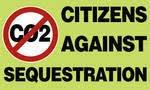
Citizens Against CO2 Sequestration - Call to Action Meeting

Citizens of Darke County and others who are interested, are urged to attend our "Call to Action" meeting tomorrow night at Lighthouse Christian Center, on Sebring Warner Road - it will begin promptly at 7 pm and the program is expected to run until 9 pm.

Darke County is the site of the one of the 7 large-scale CO2 "DEMONSTRATIONS" . The citizens of this county do not get to vote on this issue but they can take action!

Yard Signs and T-shirts will be for sale at the event. Additionally, the signs are available from Isabel (David) Culbertson with a limited number of signs available at Tropical Isle Tanning Salon.

THE PUBLIC IS URGED TO ATTEND

Adaptive Management for Carbon Capture and Sequestration

The quotes below come from this web site -
http://www.netl.doe.gov/publications/proceedings/07/carbon-seq/data/papers/ElizabethWilson.pdf


"Long term care… all agree public assumption of liability is necessary in the long term
When? (1 year to 30)
Based upon what? (performance, time limit, $$$)"

"Public Assumption of Responsibility (and public perception risk…)
Concern: Requiring public assumption of liability too early may undermine
public confidence"

"General sentiment: “if it is as safe as you say, why do you want the government to take responsibility?”

Saturday, June 27, 2009

EARTHQUAKES AND SEISMIC RISK IN OHIO


The information on this page comes from this link
http://www.epa.state.oh.us/dsiwm/document/guidance/gd_660_appendices.pdf

CAUSES OF OHIO EARTHQUAKES
The origins of Ohio earthquakes, as with earthquakes throughout the eastern United States, are poorly understood at this time. Those in Ohio appear to be associated with ancient zones of weakness in the Earth's crust that formed during continental collision and mountain-building events about a billion years ago. These zones are characterized by deeply buried and poorly known faults, some of which serve as the sites for periodic release of strain that is constantly building up in the North American continental plate due to continuous movement of the tectonic plates that make up the Earth's crust.

SEISMIC RISK
"Seismic risk in Ohio, and the eastern United States in general, is difficult to evaluate because
earthquakes are generally infrequent in comparison to plate-margin areas such as California. Also, active faults do not reach the surface in Ohio and therefore cannot be mapped without the aid of expensive subsurface techniques."

"A great difficulty in predicting large earthquakes in the eastern United States is that the recurrence interval--the time between large earthquakes--is commonly very long, on the order of hundreds or even thousands of years. As the historic record in most areas, including Ohio, is only on the order of about 200 years--an instant, geologically speaking--it is nearly impossible to estimate either the maximum magnitude or the frequency of earthquakes at any particular site.
Earthquake risk in the eastern United States is further compounded by the fact that seismic waves tend to travel for very long distances. The relatively brittle and flat-lying sedimentary rocks of this region tend to carry these waves throughout an area of thousands of square miles for even a moderate-size earthquake. Damaging ground motion would occur in an area about 10 times larger than for a California earthquake of comparable intensity."

"An additional factor in earthquake risk is the nature of the geologic materials upon which a structure is built. Ground motion from seismic waves tends to be magnified by unconsolidated sediments such as thick deposits of clay or sand and gravel. Such deposits are extensive in Ohio.

Geologic mapping programs in the state geological surveys and the U.S. Geological Survey are therefore critical to public health and safety."

MAP OF DEEP STRUCTURES IN OHIO


Friday, June 26, 2009

CARBONGATE

Carbongate

By INVESTOR'S BUSINESS DAILY | Posted Friday, June 26, 2009 4:20 PM PT

Climate Change: A suppressed EPA study says old U.N. data ignore the decline in global temperatures and other inconvenient truths. Was the report kept under wraps to influence the vote on the cap-and-trade bill?


Read More: Global Warming


This was supposed to be the most transparent administration ever. Yet as the House of Representatives prepared to vote on the Waxman-Markey bill, the largest tax increase in U.S. history on 100% of Americans, an attempt was made to suppress a study shredding supporters' arguments.

On Friday, the day of the vote, the Competitive Enterprise Institute said it was releasing "an internal study on climate science which was suppressed by the Environmental Protection Agency."

In the release, the institute's Richard Morrison said "internal EPA e-mail messages, released by CEI earlier in the week, indicate that the report was kept under wraps and its author silenced because of pressure to support the administration's agenda of regulating carbon dioxide."

Reading the report, available on the CEI Web site, we find this "endangerment analysis" contains such interesting items as: "Given the downward trend in temperatures since 1998 (which some think will continue until at least 2030), there is no particular reason to rush into decisions based on a scientific hypothesis that does not appear to explain most of the available data."

What the report says is that the EPA, by adopting the United Nations' 2007 "Fourth Assessment" report, is relying on outdated research by its Intergovernmental Panel on Climate Change (IPCC). The research, it says, is "at best three years out of date in a rapidly changing field" and ignores the latest scientific findings.

Besides noting the decline in temperatures as CO2 levels have increased, the draft report says the "consensus" on storm frequency and intensity is now "much more neutral."

Then there's one of Al Gore's grim fairy tales — the melting of the Greenland ice sheet and glaciers the size of Tennessee roaming the North Atlantic. "The idea that warming temperatures will cause Greenland to rapidly shed its ice has been greatly diminished by new results indicating little evidence for operations of such processes," the report says.

Little evidence? Outdated U.N. research? No reason to rush? This is not what the Obama administration and House Speaker Nancy Pelosi were telling us when they were rushing to force a Friday vote on Waxman-Markey. We were given the impression that unless we passed this cap-and-tax fiasco, polar bears would be extinct by the Fourth of July.

We have noted frequently the significance of solar activity on earth's climate and history. This EPA draft report not only confirms our reporting but the brazen incompetence of those "experts" that have been prophesying planetary apocalypse.

"A new 2009 paper by Scafetta and West," the report says, "suggests that the IPCC used faulty solar data in dismissing the direct effect of solar variability on global temperatures. Their report suggests that solar variability could account for up to 68% of the increase in Earth's global temperatures."

The report was the product of Alan Carlin, senior operations research analyst at the EPA's National Center for Environmental Economics (NCEE). He's been with the EPA for 38 years but now has been taken off all climate-related work. He is convinced that actual climate observations do not match climate change theories and that only the politics, not the science, has been settled.

Thomas Fuller, environmental policy blogger with the San Francisco Examiner, wrote Thursday in a story developed in conjunction with Anthony Watts' Web site wattsupwiththat.com: "A source inside the Environmental Protection Agency confirmed many of the claims made by analyst Alan Carlin, the economist/physicist who yesterday went public with accusations that science was being ignored in evaluating the danger of CO2."

All this is particularly interesting because of the charges by Al Gore, NASA's James Hansen and others that the Bush administration and energy companies actively suppressed the truth about climate change.

One of the e-mails unearthed by CEI was dated March 12, from Al McGartland, office director at NCEE, forbidding Carlin from speaking to anyone outside NCEE on endangerment issues such as those in his suppressed report.

Read the rest of the story here...........

Saturday, June 20, 2009

Groundwater, Saline Aquifers, and Proposed CCS Project s


Darke County, Ohio is the proposed site of one of the large-scale Carbon Capture and Storage projects. (CCS - aka CO2 Sequestration) Greenville, OH has been selected as the site for the MRCSP's Phase III "Demonstration Project" in which they plan to bury 1 Millon Tons of CO2 in the Supercritical Form known as Supercritical CO2.

This area is a strong agricultural area and it sits on top of a sole source aquifer


Technology has advanced rapidly, whoever thought we'd have this technology in our lifetime?

I question why anyone would want to inject supercritical CO2 into our saline aquifer and destroy the possibility of it being used in the future. What potential mess are we leaving for future generations to clean up?


The quotes below are from the web site - http://www.pnl.gov/gtsp/publications/2008/papers/2008_davidson_impacts_future_demand.pdf

Assessing the impacts of future demand for saline groundwater on commercial deployment of CCS in the United States
Casie L Davidsona*, James J Dooleyb, Robert T Dahowskia
Pacific Northwest National Laboratory, 902 Battelle Avenue, Richland, Washington 99354, USA
Pacific Northwest National Laboratory, 8400 Baltimore Avenue, Ste 201, College Park, MD 20740, USA

This is a very important article - it addresses the potential impact that CCS might have on the future demand for groundwater within the United States especially as these projects increase in number. A number of areas of the U.S. are very dependent upon their groundwater - many are over-utilized or depleted or moving towards depletion as demand grows.

This geological formation in the western Ohio area is known as the Mount Simon Sandstone and it is this same saline aquifer that is considered to be an ideal formation for CO2 waste pumped into the earth as the final deposit for CO2 sequestration projects. It is deposited in the geological formation forever, not stored to be retrieved at a later date.

Water is our most precious resource.


The bold areas in red are excerpts from the article referenced below. They have been enhanced in red for those who skim articles. The excerpts are from random paragraphs and may or may not be in order... please read the entire article.

Please be sure to read the entire article http://www.pnl.gov/gtsp/publications/2008/papers/2008_davidson_impacts_future_demand.pdf


"The need to meet future water demands may lead some parts of the nation to consider supplementing existing supplies with lower quality groundwater resources, including brackish waters that are currently not considered sources of drinking water but which could provide supplemental water via desalination. In some areas, these same deep saline-filled geologic formations also represent possible candidate carbon dioxide (CO2) storage reservoirs. The analysis presented here suggests that future constraints on CCS deployment – due to potential needs to supplement conventional water supplies by desalinating deeper and more brackish waters – are likely to be necessary only in limited regions across the country, particularly in areas that are already experiencing water stress."

(Please see map of Ohio on the above web site)

"As Figure 1 illustrates, some areas of the U.S. use very little groundwater to supply their populations with drinking water. In particular, Appalachia, the Northeast and certain areas in the Midwest and Pacific Northwest rely predominantly on surface waters to meet their public supply needs. In other areas, however – particularly the Southwest, Gulf Coast and Florida, and certain other parts of the Midwest – groundwater provides a large fraction of the total public water supply, well over 50 percent in many areas. It is also worth noting that the use of groundwater to supply public drinking water appears to be on the rise. In 1985, 379 counties in the U.S. supplied more than 80 percent of their population with groundwater; in 1995 there were 436, a 15 percent increase [9]."
"3.5. Ohio River Valley Aquifers
Because the most promising CO2 storage resource in the Ohio River Valley does not underlie a major drinking water aquifer system in many areas of interest for CO2 storage, there are unlikely to be significant conflicts regarding saline water use for CCS. However, the Mt. Simon Formation, one of the key CO2 storage targets in this region, shallows to the northwest, in northern Illinois, where formation waters are fresh and the aquifer is an important groundwater source."

(Note-
Greenville, Ohio sits on a freshwater sole source aquifer)
"Adapting to growing populations, declining water levels within key aquifers, and changing precipitation patterns may further strain heavily used groundwater resources in areas already impacted by water supply issues. Within certain regions of the nation, water scarcity concerns may prompt further consideration for targeting nearby high salinity or brackish water in deep aquifers for treatment by desalination technologies to augment more conventional supplies. Deep geologic formations that could be used as a permanent repository for anthropogenic CO2 in climate change mitigation efforts via CCS contain highly brackish waters that in select regions might represent potential targets for future waters supplies (particularly if they are below the salinity of seawater, approximately 35,000 mg/L TDS). This possibility might present a competing use for these deep geologic formations, and should be examined to estimate the potential probability, location, and magnitude, of such impacts."
"The likelihood that deep, saline groundwaters exceeding the USDW salinity threshold may be demanded as future sources of drinking or irrigation water increases in areas where groundwater currently supplies a significant portion of the region’s water supply; in areas with already constrained water supplies, such as the High Plains / Ogallala region; in areas where significant population growth is expected to overburden current surface and groundwater resources within the near- to mid-term, such as in parts of the Southwestern U.S. and areas of Texas; and in areas where there are limited other sources of saline waters (i.e., seawater) nearby."
' In areas that meet one or more of these criteria and also have a significant potential demand for deep geologic CO2 storage, there exists the possibility for differences of opinion regarding the best use of the saline groundwater underlying these regions. In such cases, permitting or garnering public acceptance for proposed CCS projects will require regulators and potential CCS operators to strike a balance between the future needs for high quality drinking and agricultural water, and the use of CCS in a given area as a climate change mitigation strategy."

CO2 Sequestration - Liability and States


As you research CO2 sequestration projects and the liability issues you often see articles that mention the state should take ownership after a certain time has passed. I wondered WHY a state would ever consider that option. Liability follows ownership...

Read both articles - VERY ENLIGHTENING.


http://www.globalpublicmedia.com/richard_bell_wanna_bet_the_farm_on_carbon_capture_and_sequestration


This second link is to a PowerPoint Presentation by Ian Duncan, Bureau of Economic Geology University of Texas at Austin, to me, it tells the real story of CO2 sequestration -( see link below)

Check it out - not one word about how it cleans up the atmosphere, protecting us from the dangers of CO2 as a Green House Gas - No, it tells the real tale - how to get it done, even if it means doing a EOR project for public acceptance - to put dollars in deep pockets! (and at the time putting a false sense of security in the minds of their constituents with the sovereign immunity issue!


"CO2 EOR Is not “The Answer”…but CO2 EOR is a great beginning
• Economic or near economic in current market, depending on cost of CO2
• Acceptable to public
• Other major benefits (domestic energy production, taxes, employment)
• Build infrastructure that can be used long term for large volume CO2 disposal =
stacked storage

Could CO2 Sequestration Storage Volume in the Gulf Coast be valuable in the future?
~ 222 Billion Tons of CO2 at $30 to $80 a ton (based on economists projects)
…. You do the math!"


I couldn't help but hear the words of Paul Harvey in my ear as I read it, "and now you know the rest of the story".
And they wonder WHY communities object to this experimental technology?


http://txccsa.org/07_Duncan_CH08_ppt.pdf

Monday, June 15, 2009

Local Opposition to Proposed CO2 Sequestration Project Grows in Darke County OH

Photo by Lyn Bliss /Advocate Photo


Darke County, OH (Greenville, OH)

Citizens Against CO2 Sequestration - the grassroots movement in Darke County, Ohio is growing to send raise public awareness of the proposed large-scale CO2 sequestration EXPERIMENT planned for Darke County and the risks to their community.

Signs are going up all over the county.

Thank you to all who are showing your opposition to the EXPERIMENTAL CO2 Sequestration project planned for our community! Talk to your friends and neighbors, plan to attend The Stop CO2 Sequestration rally and our Call To Action Meeting on Monday, June 29, at the All Seasons Place on Sebring Warner Road at 7 PM.

A public Stop CO2 Sequestration Rally is planned for Saturday morning - June 27 - Annie Oakley Park in downtown Greenville at 10 am - more details coming soon. Signature Petitons, information will be available as well as Yard Signs. Yard Signs can be purchased for $5 each.
Plan to Attend - Homemade signs welcome.

Signs are available from Isabel Culbertson or by emailing - StopExperimentalCO2Projects@yahoo.com

Click on this link to read the article in The Daily Advocate and to access their CO2 blog.

If you know of other newspapers hosting their own blog about CO2 sequestration projects please let us know. To date, we believe The Daily Advocate in Greenville, Ohio is the only one.

Clean-coal test is a go in Ohio- and it will be in Greenville, OH

From the Columbus Dispatch - this large-scale CO2 project was announced to the public May 6, 2007 and Battelle was already onboard.........so the question is, when did that deal really begin?

Sen. George V. Voinovich, R-Ohio
announces Large Scale CO2 Project for Darke County


Clean-coal test is a go in Ohio
Feds' $61.1 million will pay to pump CO{-2} underground
Wednesday, May 7, 2008 3:15 AM
THE COLUMBUS DISPATCH


WASHINGTON -- The federal government said yesterday that it will spend $61.1 million for a clean-coal project in Ohio, a major step in deciding whether it is commercially feasible to burn Midwest coal without emitting the carbon dioxide thought to cause global warming.

The money will be funneled to a demonstration project in the Mount Simon Sandstone formation in Darke County in western Ohio.

About 1 million tons of carbon dioxide from an ethanol facility will be injected 3,000 feet into the sandstone formation.

Proponents contend that the process, known as carbon sequestration, is crucial for the future of Ohio coal. If electric utility plants can burn coal without causing global warming, it would provide a major boost to Ohio's coal industry.

Sen. George V. Voinovich, R-Ohio, said in a statement that "this award is a vitally important step forward in our nation's commitment to crafting a comprehensive solution to climate change."

To read the entire article click here


Midwest Regional Carbon Sequestration Partnership—Development Phase

http://www.netl.doe.gov/publications/factsheets/project/Proj599.pdf