Friday, May 22, 2009

Vulnerability of Drinking Water and Geosequestration (CO2 Sequestration)


Carbon Capture and Sequestration is also known as CO2 sequestration and Geosequestration... in this information supplied by the US EPA, they refer to it as "GS".


All this information came from the U S EPA
Vulnerability Evaluation Framework for Geologic Sequestration of Carbon Dioxide
July 10, 2008 -

Click on the above title to be taken to the complete publication.....lots to read there as you form your own opinion regarding CO2 sequestration... would you want it in YOUR COMMUNITY?

Neither do I - NIMBY - OR YOURS!

"5.2.3 Pressure-Induced Physical Effects
Injecting CO₂ into geologic formations will in most cases cause subsurface changes in pressure. As
discussed above, induced fracturing and fault reactivation can occur if injection pressure exceeds fracture pressures, which may in turn result in the opening of fl uid migration pathways. If pressures are great enough, they could in extreme cases cause earthquakes (Healey et al., 1968).

There may be greater uncertainty about evaluating pressure effects in GS systems when examining the potential for pressure-induced regional scale impacts that do not involve fracturing or faulting.

As discussed in Chapter 4, pressure changes in the injection zone could cause regional impacts on overlying aquifer systems, including changes in groundwater fl ow directions and water table levels. These may result in alterations in the distribution and fl uxes of groundwater. This could in turn have other impacts, for example, changing the quantity of groundwater that is available for municipal drinking water supplies. There also could be pressure-induced migration of brines and other fluids through the pore structure of overlying formations into groundwater receptors, which may impact water quality. Furthermore, pressure-induced fluid displacement could result in the release of brine at locations where injection zone formations outcrop at the land surface. Regional pressure effects have been the focus of relatively few studies, and uncertainties and vulnerabilities associated with this subject should be addressed through additional research."

Did you know the bailout package included this?

This great clip from our friends at treehugger.com


By ALEXANDRA SUKHOMLINOVA, News-Record Writer
(Thank you Alexandra - the link to her story is here )
Published: Sunday, October 12, 2008 12:19 AM MDT

Buried in the $700 billion bailout package passed by Congress last week was a small item of great consequences for Wyoming. So far, few people, even those in the energy industry, know that the Economic Stabilization Act included a tax credit for carbon sequestration and using carbon dioxide in pumping oil and natural gas ” things that could continue to keep Wyoming’s economy strong and deal with the sticky issue of what happens to the byproduct of burning fossil
fuels.

“It’s a wonderful financial opportunity to people,” said Rep. Tom Lubnau, R-Gillette, who helped draft two bills on carbon sequestration that were passed by the state Legislature earlier this year. “I think it was buried in the legislation and nobody knows except for the industry, but there is lots and lots of interest.”

Wednesday, May 20, 2009

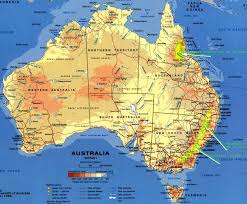
Australian Government reports highlight CCS dangers


From our friends in the land down under.......... a list of dangers associated with carbon sequestration (CCS) - for your reference, the link to the web site is here

Just a few of them......


  1. The cost of monitoring reservoirs will have to be borne by someone. Corporations have already suggested that the public pay for monitoring.
  2. It is unclear what remedial work can be done, if any, should carbon die-oxide leak from a reservoir.
  3. Many trials of CCS technology have leaked and some projects factor in a leak factor per year.
  4. Reservoirs of sequestered carbon die-oxide must be monitored forever.

Quoting the IPCC report. http://www.ipcc.ch/activity/srccs/index.htm emphasis added. Comment;
Hydrocarbon pipelines do leak, and CO2 is a smaller molecule than most of the hydrocarbons, giving it a greater tendency to leak. The ‘very important’ role of monitoring would have to continue forever.


"In the case of CO2 injection into deep saline formations, there is also the small possibility that displaced brine could contaminate groundwater. The contamination of freshwater aquifers could be caused by vertical migration of stored CO2. Buoyancy forces, caused by the density difference between the injected supercritical CO2 and the formation waters, will tend to drive stored CO2 upward. If the formation is not a geologic trap or not adequately sealed by an impermeable caprock, CO2 could leak from the storage reservoir. There is then the potential for the vertically migrating CO2 to dissolve in shallow aquifer waters, form carbonic acid and lower the aquifer water pH, which in turn could result in the mobilization of heavy metals and/or the leaching of nutrients. In a worst-case scenario, the contamination of a freshwater aquifer could exclude its use for drinking or irrigation supplies. CO2 migration within the subsurface also has the potential to contaminate energy and mineral resources as well as pose an occupational safety hazard for mining and exploration activities. “

"Slow, long-term release of CO2 to the atmosphere (i.e. reservoir leakage)

Reduction in the net climate change mitigation achieved through CCS, resulting in worse than expected global warming

Sudden large-scale release of CO2 to the atmosphere

Reduction in the net climate change mitigation achieved through CCS, resulting in worse than expected global warming

Asphyxiation of humans, animals and plants

Escape of CO2 to shallow groundwater

Water acidification, mobilised toxic metals, leached nutrients (Bruant et al. 2002)

Displacement of deep brine upward

Contamination of potable water sources"

There is considerably more information on their web page.......be sure to visit it to read the article article and follow links.

http://www.aboutcarbon.com.au/Display.aspx?tabid=3300


Tuesday, May 19, 2009

Keep your eyes open - an easier introduction of CCS into your area

Attention Ohioans! Don't let this happen to you!

It's an interesting article - mentions how Carbon Capture and Sequestration (CCS or CO2 sequestration) could be introduced into an area without the public being aware of it as a CCS project.... or with more public acceptance........after all, who wouldn't let them explore your property if they thought they'd find oil and gas....and needed to push it out of the ground with CO2.... known as EOR - Enhanced Oil Recovery.

Ohio is mentioned in this article!


Read the entire story by clicking on this link -

Monday, May 18, 2009

Carbon capture and storage 'being oversold as a panacea'


The Hill Times, April 13, 2009

But critics and experts say there are geological risks, it's a waste of taxpayers' money and the 'economics are deadly.'

By Bea Vongdouangchanh

Carbon capture and storage of Canada's greenhouse gas emissions is still 12 to 20 years from being commercialized, but it's being oversold as a panacea and a silver bullet, however, it's a waste of taxpayers' money, there are geological risks to storing carbon dioxide underground and the economics "are deadly," say experts and critics who believe the federal government should be investing in other environmental solutions such as renewable energy and energy efficiency.

Jack Century, a Calgary-based retired petroleum, minerals and environmental geologist with more than 50 years of experience in the industry, told The Hill Times last week that carbon capture and storage (CCS) procedures—burying greenhouse gas emissions—could cause induced earthquakes or "micro seismicity" which risk CO2 leakage. He said injecting any gas or liquid into the ground without very carefully studying the geology could become a hazard.

"If you're not careful, you can inject it higher than the natural pressures in the reservoir you're injecting into," he said, noting that if the reservoir is over a fault line or very close to one, it could cause an earthquake. "It isn't just earthquakes that are a problem, but it's when you start injecting fluids into the earth and you don't know what you're doing, you can start small seismic events, we call them micro seismicity and they can cause fractures, and the fractures themselves can interfere with the reservoir and violate the integrity of the reservoir and cause leakage. It doesn't become a hazard in terms of earthquakes but it becomes a hazard in terms of escaping liquids and you don't know where they're going to go."

..........Even CCS proponents admit that carbon dioxide injected deep underground could find its way back to the surface after an earthquake or via groundwater channels."

Mr. Nikiforuk is a fierce critic of CCS, saying, "Creating an energy intensive burial system to hide a problem that could be solved by conserving fossil fuels is morally bankrupt. CCS is a last-ditch survival effort that defies economics and shirks logic."

"The economics of CCS are deadly," he said.

"NDP MP Linda Duncan (Edmonton Strathcona, Alta.) said "it's a waste of taxpayer money" to invest in CCS. "If it's not a proven technology to safe-keep it, then the public should not be bearing the liability," she said last week."


"It's true that this technology will not be effective everywhere. It can only work in places where it's matched with the right geology. Co2 is a very dangerous gas, and there have been stories about natural leaks of carbon dioxide that have caused death, so its very important that this technology is monitored and regulated very closely," she said, adding that CCS is "very expensive" which means governments will not pay for CCS projects entirely.

The Hill Times

http://www.hilltimes.com/html/index.php?display=story&full_path=2009/apr...

Sunday, May 17, 2009

CO2 Sequestration - who assumes the liability?


"CO2 is highly compressible, its density influenced by pressure and temperature.At injection depths, pressure is approximately 1,500 pounds per square inch (102 atmospheres) and the temperature is approximately 130°F. Under these conditions, 2,000 tons of CO2 would have a volume of about 200,000 cubic feet or about the size of a football field 3.5 feet deep." Lawrence Berkeley National


Think about this..... how safe does THIS sound? It goes into the earth forever, has a list of risks associated with it and Guess Who assumes the liability? I think you'll be surprised...... and even more unsettled when you read this!

The large-scale CO2 sequestration projects are putting 1 million tons of CO2 into the earth!!! Would you call this "safe"? They do.

Ratepayers of the electric companies will pay for Capture with higher rates.

Failure to Manage Liability Puts Taxpayers at Risk


Read the story here - Advancing Carbon Sequestration
Research in an Uncertain Legal and
Regulatory Environment
A Study of Phase II of the DOE Regional Carbon
Sequestration Partnerships Program
Craig A. Hart


January 2009

Saturday, May 16, 2009

General hazards of carbon dioxide


This information is from the following web site:
http://www.hse.gov.uk/carboncapture/carbondioxide.htm


"At room temperature and ambient pressure CO2 is a colourless, odourless gas that will not support combustion or human life. CO2 has been recognised as a workplace hazard for over a century. It is significantly heavier than air and many fatalities from asphyxiation have resulted from entry into pits, tanks, sumps or cellars where CO2 has accumulated and displaced oxygen.

It is also possible for dangerous levels of CO2 to form out-of-doors in trenches, depressions or valleys. This is particularly likely when the gas is colder than the surrounding air, which may occur following pressurised release.

In 2000, a US Environmental Projection Agency study on CO2 related incidents in fire scenarios reported that since 1975 there were 51 recorded incidents involving the discharge of CO2 fire extinguishing systems resulting in 72 deaths and 145 injuries.
There is no significant inherent human response to CO2 that could be useful as a detection mechanism. Human response to hydrogen sulphide by smell occurs at very low (ppm) concentrations, similarly with ammonia and sulphur dioxide.

In contrast, CO2 is present in the air we breath (0.037%). This may cause problems with instrumented detection because the 'background' CO2 levels are so high. In addition, the cooling effects of a pressurised CO2 leak may have an adverse effect on the accuracy and operability of CO2 gas detection systems.

The recognition of the dangers of CO2 has prompted much research into its toxicity in both human volunteers and animals. It is now known that, in addition to the problem of asphyxiation due to the displacement of oxygen, the inhalation of elevated concentrations of CO2 can increase the acidity of the blood triggering adverse effects on the respiratory, cardiovascular and central nervous systems. Data from published research reports has been used by HSE to quantify the toxicity of CO2 in the form of Dangerous Toxic Load (DTL)1 values.

The DTLs have been used in calculations by the Health and Safety Laboratories (HSL) to demonstrate that CO2 exhibits major accident potential, when transported by pipeline in large quantities at ambient temperature and at a pressure of 7 bar or more, well below the dense phase or supercritical region. It is not yet clear whether controls should be applied to the transport of CO2 in this context but pending further research, it is possible that HSE will propose amending the Pipelines Safety Regulations to include CO2 as a dangerous fluid.

Additional hazards of dense phase or supercritical carbon dioxide

For economic and technical reasons it is likely CO2 will be handled close to or above its critical pressure (73.82 bar) where many of its properties are similar to that of a liquid. In this state it is often referred to as a dense phase fluid, whereas above critical temperature (31.04oC) and pressure it is referred to as supercritical. Most of the additional hazards associated with dense phase or supercritical CO2 arise when this pressure suddenly falls or is lost completely.

Scale of the thermal cooling envelope

In the event pf a major pressure loss, e.g a pipe rupture or containment failure, the depressurisation will result in an increase in the volume occupied by the CO2 of several hundred fold as the escaping fluid undergoes a rapid expansion (and phase change) as a proportion essentially 'boils' and becomes a gas while the remainder forms solid particles. This rapid, violent expansion causes the temperature of escaping CO2 to fall very rapidly, frequently below -80°C. while the particles of solid CO2 formed (dry ice) will result in projectiles expelled at very high velocities.

Cryogenic burns and impact injuries from extremely cold jet of gas and entrained missiles are serious hazards to personnel. Cryogenic embrittlement of structural steelwork and adverse effects from the impingement of extremely cold gas jets on safety-critical equipment are major threats to the structural and functional integrity of nearby plant unless appropriately designed or protected.

Toxic contamination effects

Supercritical CO2 is a highly efficient solvent. When supercritical CO2 undergoes a significant pressure reduction it moves from its supercritical state with super solvent properties to a gaseous state with virtually no solvent capability. In any environment where other substances are present with supercritical CO2 their solvation will occur resulting in fluid medium or "solution" containing various compounds or elements many of which may be extremely toxic. Any toxic substance held in such a pressurised 'solution' will 'precipitate' out on loss of pressure or containment and is likely to result in harmful human exposure or environmental damage due to the contamination of the area of deposition unless appropriate measures are taken.

Dry Ice 'grit blasting effects'

Where captured CO2 may be present with solid particles such as reservoir-derived sand and other solid debris, loss of containment may result in these combining with the dry ice formed to produce particles of a much greater abrasive capability than dry ice alone. This would enhance the erosion effects on process pipework and vessels adjacent to the leak which could lead to further damage to equipment and hence risk to people.

Specific challenges associated with dense phase or supercritical carbon dioxide

Whilst the processes that make up Carbon Capture and Storage (CCS) are not novel in themselves there is relatively little experience worldwide in managing the risks associated with CO2, compared with oil and gas. The major accident hazards presented by handling high pressure CO2 offshore or onshore need to be considered in the context of about 10,000 years' operating experience in managing hazards associated with hydrocarbon processing offshore alone, and probably much more if onshore processes are included2. In comparison there are probably less than 100 operating years for handling CO2 and significantly less in dealing with supercritical CO2.

Modelling dense phase/supercritical CO2 releases

The ability to anticipate foreseeable major accident scenarios and accurately predict the consequences of these hazardous events is a fundamental element in the assessment of the risk. A lack of substantial operation experience in a novel process or technology generally leads to significant difficulties in identifying accurately the hazards associated with that process or technology.

We do not yet fully understand the behaviour of CO2 when released from dense phase. Industry is researching appropriate models which will need to be validated. There is a need for appropriate scale experimental work to provide HSE and duty holders with a thorough understanding of how CO2 behaves during foreseeable large releases.

Containment and integrity

Whilst there are applicable general engineering standards, there is a lack of internationally recognised standards and codes of practice specifically for dense phase or supercritical CO2 plant and equipment. When designing, fabricating and maintaining plant for handling and transporting CO2 it is important that the full significance its physical properties, at the temperatures, pressures and inventories required are fully recognised and managed accordingly. Where applying standards developed for other substances including hydrocarbons, such as natural gas, extreme caution is advised as even the highest standards for many other substances may not be sufficient to ensure adequate containment for CO2 under the expected, and unexpected operating envelope(s).


Deep-Sixing CO2 Emissions

http://articles.latimes.com/2006/sep/03/science/sci-northsea3?pg=2

Until recently, however, few cared so much about how long the carbon dioxide stayed put.

That is starting to change. Since 2000, the North American energy company EnCana Corp. has boosted oil production 50% at Weyburn, Canada, by injecting millions of tons of surplus CO2 from North Dakota. Plans call for at least 20 million tons in all to be sequestered permanently there in coming decades -- an amount equal to the annual emissions of 6.8 million cars.

So far, monitoring indicates that most of it will stay underground but, by one report, about 2,500 tons a day bubble to the surface where it must be recaptured and re-injected.

Critics of the storage operations worry about the long-term safety of the reservoirs. No one knows whether excess carbon dioxide will remain stable underground for hundreds or thousands of years.

"If it can find any well, crack or conduit in the rock, it will escape," said Harvard carbon storage researcher Kurt Zenz House.

With more than 3.5 million oil wells drilled in the U.S. since petroleum exploration began in earnest 150 years ago, there is no shortage of potential leaks.

Experts also worry how so much carbon dioxide will alter the chemistry of the storage formations themselves. Bubbles composed of millions of tons of sequestered CO2 could form an acid that could etch away the confining rocks or erode the concrete caps on well heads.

To test the effects of carbon dioxide storage, researchers funded by the U.S. Department of Energy recently injected 2,000 tons -- about half a day's power plant emissions -- into a mile-deep well northeast of Houston.

After monitoring the site for two years, researchers at the U.S. Geological Survey found no leaks.

But in a study made public in July, they did discover that the buried CO2 increased the acidity of the saltwater in the rock enough to dissolve the surrounding minerals. Should enough minerals be eaten away, the gas could seep slowly into the atmosphere again, they reported. The acidic solution also could combine with trace metals and organic compounds to contaminate groundwater."

Wednesday, May 13, 2009

CO2 Sequestration - How Secure Does This Make You Feel?


I think this is frightening - 2 Articles

How safe is CO2 sequestration? How much do the experts really know?
Remember - the largest portion of these experiments are paid for by taxpayers!

Article #1) January 24, 2007 - "Participants were asked to formulate questions and identify research needs to be addressed as EPA prepares to develop a scientifically-sound management strategy for CO2 injection."
(they are listed in the article - several pages of questions) -


Article #2) THREE months later -An announcement saying the well was ready for CO2 sequestration in Shadyside, OH

At that time, there were already MORE "CO2 sequestration Demonstration" projects on the radar for Ohio....... and all over the world...with many more in progress.


"State Regulators Workshop on Geologic Sequestration of CO2
The Environmental Protection Agency (EPA), in coordination with the Department of Energy’s National Energy Technology Laboratory (NETL), and the Ground Water Protection Council (GWPC) held a workshop on geologic sequestration of carbon dioxide (CO2) on
January 24, 2007 in San Antonio, Texas. At the workshop, representatives of state governments, EPA Regions, DOE research laboratories and Regional Partnerships, industry, non-governmental organizations (NGOs), academia, and other interested parties met in small groups to discuss issues associated with CO2 injection for the purposes of geologic sequestration (GS).

Participants were asked to formulate questions and identify research needs to be addressed as EPA prepares to develop a scientifically-sound management strategy for CO2 injection. The participants were organized into groups of 8 to 10 people, with each group having a mix of representatives from EPA regions, states, industry, research institutions, academia, and NGOs, to allow for sharing various points of view. The group discussed the following topics: site characterization; modeling; area of review (AoR); injection well construction; mechanical integrity testing (MIT); measuring, monitoring, and verification (MMV); closure and post-closure care; and liability and financial responsibility."

Click here for the entire article You will WANT TO READ this article.


Then - just 3 months later -

Issued on: April 24, 2007

"Regional Partnership Completes 8,000-foot Well for Critical Carbon Sequestration Assessment

Midwest Regional Carbon Sequestration Partnership Prepares for Test of Geologic Carbon Sequestration in Appalachian Basin

Washington, DC - The Midwest Regional Carbon Sequestration Partnership (MRCSP) has completed an 8,000-foot well at FirstEnergy's R. E. Burger Plant near Shadyside, Ohio, in preparation for a geologic sequestration field test. Sponsored by the Office of Fossil Energy's National Energy Technology Laboratory, the field test will determine the feasibility of storing CO2 in deep saline formations in the Appalachian Basin.

"The carbon sequestration field test in the Appalachian Basin is an important step in turning the promise of carbon sequestration into a reality," said Acting Assistant Secretary for Fossil Energy Tom Shope. "By assessing carbon storage in an area of the country that produces 20 percent of the nation's electricity, the test helps pave the way toward a future in which America's abundant fossil resources can be used to produce energy without contributing to global climate change."

Read the rest of the article here


Skating to the dark side on thin ice


http://www.bloomingtonalternative.com/node/9368


June 29, 2008

When burned, coal produces three times its own weight in carbon dioxide (CO2) -- making it far dirtier than any other energy source, per unit of usable energy. Carbon dioxide is the main human contributor to global warming, so as more people worry about the future of human civilization in a hothouse world, new coal plants are being canceled across the country.

To protect its enormous investment in land, equipment, politicians and environmental groups, the coal industry has bet its future on an untried technology called "carbon capture and storage" (CCS). The idea is to capture the carbon dioxide emitted by burning coal, compress it into a liquid and bury it a mile below ground, hoping it will stay there forever.

The coal industry's fanciful name for this is "clean coal," a.k.a. carbon sequestration. And even though clean coal does not actually exist anywhere on Earth, the industry has sold the idea so effectively that more than 60 percent of Americans say they favor it.

To gain permission to build new coal plants, the coal and electric power industries are now promising the moon: "This new coal plant will be 'capture-ready.' Just let us build this plant now, and we'll add a CCS unit onto the back end as soon as CCS technology has matured and is affordable."

In other words, the industry is saying, "Let us build 'capture-ready' coal plants now, and someday, eventually, maybe, we'll be able to capture the CO2 and bury it in the ground, where we hope it will remain forever."

This is precisely the situation at Duke Energy's 'capture-ready' plant being proposed at Edwardsport in Knox County, upwind of Bloomington.

The 630-megawatt Edwardsport plant will emit an estimated 4,300 tons of CO2 per year (unless and until CCS is tacked onto the plant). Therefore, during its 40-year lifetime, the plant will produce an estimated 172,000 tons, or 344 million pounds, of CO2.

Duke Energy executives insist that the deep earth beneath Edwardsport is ideal for storing hazardous liquid CO2. At least one major environmental group -- the Clean Air Task Force, headquartered in Boston -- agrees with them.

A recent news report in the Herald-Times says, "Clean Air Task Force representative John W. Thompson describes the Duke carbon sequestration initiative as a pioneering effort that could provide a template for other companies and countries to ameliorate global warming by safely storing carbon dioxide..."

When Duke Energy officials met with the editorial board of the Herald-Times, the Clean Air task Force tagged along to provide Duke Energy a patina of green.

Indiana earthquakes so powerful they shake the ground in New Hampshire

Edwardsport lies in Knox County in southwestern Indiana, about 55 miles north of Evansville. Southwestern Indiana lies atop a geologic feature known as the "Wabash Seismic Zone." Because it was only discovered in recent decades, the Wabash Seismic zone is not nearly so well known as the nearby "New Madrid Seismic Zone."

The New Madrid Seismic Zone is famous for the earth-shattering quakes it spawned during 1811 and 1812 -- some quakes registered a magnitude 8 on the Richter scale and were felt in New Hampshire and rang church bells in Washington, D.C., according to the Indiana Geological Survey.

Here's what the Central United States Earthquake Consortium has to say about the Wabash Seismic Zone:

"Recent studies have indicated that the New Madrid Seismic Zone is not the only 'hot spot' for earthquakes in the Central United States. On June 18, 2002, a 5.0 magnitude earthquake struck Evansville, with an epicenter between Mt. Vernon and West Franklin in Posey County, in an area that is part of the Wabash Valley Seismic Zone. ...

"The Wabash Valley Seismic Zone is located in Southeastern Illinois and Southwestern Indiana, and it is capable of producing 'New Madrid' size earthquake events. ..."

Just two months ago, on April 18, a magnitude 5.2 earthquake shook the Wabash zone, with its epicenter only 34 miles from Edwardsport. Since then nearly three dozen earthquakes have occurred in the Wabash zone, 29 of them strong enough for local people to feel.

In other words, the Wabash zone is very active: "A magnitude 1.0 earthquake is probably happening once a week somewhere in the Wabash seismic zone," says Michael Hamburger, an IU professor of geological sciences.

Lubricating the geology

Read the rest of the article here

Interesting Aspects of the CO2 Sequestraion Pilot Project - R.E. Burger Plant -- Ohio

The web site for this article can be found here

You'll want to scroll down and read these.........amazing isn't it?

Carbon Sequestration Regulation and Permitting Moves Forward

Carbon capture and sequestration (CCS) is a critical strategy proposed for combating climate change. It involves the injection of CO2, a greenhouse gas, generated by coal-fired power plants and industrial facilities deep beneath the earth's surface for long term storage.

There are potential significant issues with CCS, including:

  1. 1. Pollutants from the plant mixing with the CO2 that is injected leading to contamination of water supplies;
  2. 2. Potential mobility of CO2 once it is injected; and
  3. 3. Corrositivity of CO2 may result in release of subsurface contaminants into drinking water supplies

The Department of Energy and Coal State's are betting heavily on the success of carbon sequestration. Federal funds are supporting some 25 projects around the country that will investigate the feasibility of CCS.

To address the concerns with CCS, U.S. EPA and the States are beginning to develop regulations for CCS projects. This Summer major developments include release of U.S. EPA's rules and the issuance of an Underground Injection Control (UIC) permit by Ohio EPA for an Ohio test site.

Beginning this month, the Midwest Regional Carbon Sequestration Project (MRCSP) is utilizing FirstEnergy's R.E. Burger Plant as a test site for injection of up to 3,000 tons of CO2. As reported on the MRCSP web page, the period of injection could vary from three to eight weeks, depending on the properties of the injection zones and the time needed for experimental set-up, regulatory oversight and monitoring.

The injection follows Ohio EPA's issuance on September 2, 2008 of a permit to allow the installation and pilot testing of the underground injection well for purposes of carbon sequestration. This is the first permit issued in Ohio that would allow injection of CO2 subsurface for purposes of carbon sequestration. Some interesting aspects of the permit include:

  1. Injection will occur at three different geologic locations- the intervals range from 5,923 feet to 8,274 feet below surface. The intervals are selected to prevent mobility of the injected CO2.
  2. Closure financial responsibility- Total project closeout including closure of the well in accordance with regulatory requirements were estimated at $75,000 to $100,000. This amount only covers sealing of the well. No money is set aside in the event any other issues arise. Some may question whether this is sufficient financial assurance if it was anything other than a test site.
  3. Monitoring of Injected Fluids- On a quarterly basis, the injected material will be analyzed for various contaminants including SO2, NOx, particulate matter, and mercury. The monitoring is an attempt to verify contaminants from the plant are not mixed with the injected CO2.

Issuance of the permit precedes finalization of U.S. EPA proposed rules governing regulation of carbon sequestration projects. U.S. EPA's proposed rules and Ohio EPA's permit rely on similar legal authority on the Safe Drinking Water Act (SWDA). The permit together with the proposed rules give insight into how CCS projects could be regulated in the future. Areas covered by both the permit and U.S. EPA's proposed rule include:

  • Geologic site characterization to ensure that wells are appropriately sited
  • Requirements to construct wells in a manner that prevents fluid movement into unintended zones;
  • Periodic re-evaluation of the area around the injection well to verify that the CO2 is moving as predicted within the subsurface;
  • Testing of the mechanical integrity of the injection well, ground water monitoring, and tracking of the location of the injected CO2 to ensure protection of underground sources of drinking water;
  • Extended post-injection monitoring and site care to track the location of the injected CO2 and monitor subsurface pressures; and
  • Financial responsibility requirements to assure that funds will be available for well plugging, site care, closure, and emergency and remedial response.

While the regulations and permitting of CCS are moving forward, not everyone is embracing CCS. In recent testimony before the U.S. House of Representatives Energy and Commerce Subcommittee on Environment and Hazardous Materials, serious concerns were raised by the American Water Works Association (AWWA) about the potential effect CCS technology may have on the nation's underground sources of drinking water. Strong regulations and successful pilot tests will go a long way to addressing these concerns.