June 22, 2009 2:45 PM in Carbon Capture & Sequestration • GHG Regulation • Research & Development | Paul Gutermann, Charles Franklin & Roseanna Baber Hill | ShareThis
Current Administration and congressional climate proposals depend heavily on geological sequestration to reduce CO2 emissions from coal-fired power plants and other major sources and tend to presume that sources in every state will have access to nearby underground storage capacity. This is the second post in a three-part series reviewing obstacles to a 50-state sequestration strategy and suggesting the need for a national infrastructure to support medium to long-range transport of CO2.
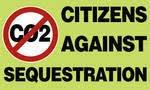
Even if additional research and site characterization could resolve geological uncertainties regarding widespread local CO2 storage, companies also will have to overcome the public and political opposition that locally undesirable land use (LULU) energy projects engender. While CO2 sequestration provides important global benefits, local communities are likely to balk at hosting a sequestration project injecting millions of tons of liquid CO2 as a waste product under or near their communities.
The saga of Used Nuclear Fuel Storage at Yucca Mountain in Nevada illustrates the challenge of siting even one nationally-important, but locally-opposed, facility. First identified as the nation’s prospective high-level nuclear waste storage site in 1987 and approved by Congress in 1994, the Yucca Mountain high-level nuclear waste storage facility received over 9 billion dollars in funding through 2008 despite vociferous opposition from local stakeholders and, in some cases, key federal constituencies. In early 2009, the Obama Administration proposed to defund the project. While only Congress can cancel the project, Senate Majority Leader Harry Reid (D-NV) has committed to doing just that. Irrespective of the merits of the decision to defund Yucca, it is a significant setback for the domestic nuclear energy industry, as the reversal leaves the nation twenty years behind in developing a long-term disposal strategy for high-level nuclear waste.
Even relatively innocuous renewable energy projects face siting difficulties. Indeed, the U.S. Chamber of Commerce recently initiated a campaign to document the wide variety of energy projects that have been stopped or delayed across the nation by local opposition. The siting challenge illustrates an important reality check for policymakers and investors: a prospective site may contain optimal subsurface geologic characteristics, but if developers cannot negotiate the local siting process, the technical feasibility of a location is irrelevant.
Siting CCS facilities on federal lands may be one way to reduce the ability of local opposition to stop a project. The Department of Interior has estimated that 5.5 percent of the onshore U.S. CO2 storage capacity is beneath potentially leasable Federal lands. But, federal lands bring limitations of their own. First, federal lands are not uniformly distributed across regions and states, and many areas of the country (e.g., the northeast, southeast and midwest) lack large swaths of federal lands on which facilities could be sited. The disconnect is even more significant when major emissions sources are considered. According to a recent DOE Report, while 65% of emissions come from east of the Mississippi River, 83% to 86% of storage capacity on federal lands lies west of the Mississippi River. In other words, a siting strategy that relies on federal lands for citing will require investment on CO2 transport to match source generation to sequestration capacity.
Second, federal lands are subject to a variety of restrictions and extensive regulatory review requirements on the use of federal lands. Any commercial-scale sequestration funded by federal dollars or constructed on federal lands will be subject, at a minimum, to the environmental review requirements of the National Environmental Policy Act and the historic review requirements of the National Historic Preservation Act. These statutes delay construction schedules, create potential avenues for litigation from opposing parties, and inject risk and expense into large-scale projects. The federal government would also have to determine that the proposed sequestration projects would be consistent with other approved uses for a federal land, a determination that can involve many different federal agencies working through multi-year planning processes.
Whether CCS project developers use federal, state, or privately-owned land for sequestration projects, they will have to demonstrate that their siting choices are safe for the local communities, safe for the local environment, and consistent with the legal standards governing such land-use. While well-funded, well-planned, and well-organized projects will be capable of overcoming these obstacles, such approvals will come at a financial and political cost. Policymakers need to factor in the realistic costs of addressing community concerns and project approvals into their policy calculus if they are to develop a realistic understanding of when, where, and how the U.S. will be able to site the sequestration capacity needed to meet carbon mitigation goals - at a financial and political price that the public will bare.
http://climateintel.com/2009/06/22/co2-transport-versus-the-50-state-sequestration-strategy-part-2-not-under-my-back-yard/