Monday, August 10, 2009

German Grassroots Opposition Movement with local political support


To our allies in Germany fighting CO2 sequestration - we are cheering you on!

Click here to be taken to the story

"It was meant to be the world’s first demonstration of a technology that could help save the planet from global warming – a project intended to capture emissions from a coal-fired power station and bury them safely underground.

But the German carbon capture plan has ended with CO2 being pumped directly into the atmosphere, following local opposition at it being stored underground."

Sunday, August 9, 2009

Goldman Sachs: "New Carbon Market Presents Major Opportunity"


A recent Goldman Sachs report on the Waxman-Markey climate bill confirms it would result in one of the largest commodity markets in the world subject to significant speculation and have relatively marginal impacts on the renewable power industry.

A Goldman Sachs report on the Waxman-Markey climate bill, recently issued to Goldman Sachs' clients, confirms Breakthrough Institute analysis showing the legislation would result in one of the largest commodity markets in the world subject to significant speculation by financial firms, and would have relatively marginal impacts on the renewable power industry.

Titled "Carbonomics: Measuring impact of US carbon regulation on select industries" (not publicly accessible), the report concludes that "A new carbon market presents a major opportunity for exchanges and clearinghouses, especially as more allowances and offsets trade over time."

In a section titled "Carbon exchanges -- build it, and they will (must) come to trade," it estimates the bill would grow the global carbon market to become one of the largest in the world, with trading volume of 175 to 263 million contracts per year -- larger than the oil and gas markets combined and approximately the third largest commodity market in the world after U.S. interest rates and stock indexes. The analysts estimate the profit margin for financial firms resulting from this new carbon market could reach $2 billion per year globally.


Read the full story ............more

Pressure build-up during CO2 storage in partially confined aquifers


YagnaDeepika Orugantia and Steven L. Bryant

"As the number or proximity of faults increases, the injectivity decreases slightly. In contrast to injectivity, contours of elevated pressures are sensitive to faults. They extend farther as the number or proximity of faults increases, increasing the area of influence and thus the risk of failure (seal fracture, fault activation) significantly. Thus well placement relative to known faults is an important design consideration. The effect of aquifer depth on pressure build-up due to injection is also investigated. The variation of fluid viscosity with pressure and temperature (brine viscosity is much more sensitive than CO2 viscosity) is the dominant effect on injectivity and pressure build-up. An important overall message is that contours of elevated pressure extend much farther into the aquifer than the CO2 plume itself. Thus risk assessment that focuses exclusively on CO2 may underestimate actual project risk."

The link to this abstract is here

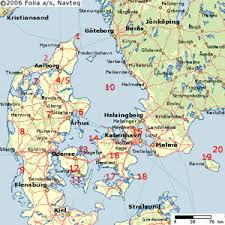
Strong Oppostion to CO2 storage project in Denmark


A group of landowners in northern Jutland have collectively dug in their heels to stamp out a power company’s plans to establish a giant underground carbon dioxide storage chamber in Jammerbugten.

The power company has been promoting the argument that carbon dioxide is no more harmful than water and insists the resident have nothing to fear from the project. Vattenfall also points out that the European Union has indicated it wants 10-12 full-scale CCS projects at power plants across the continent within the next few years.

But even scientists at the Geological Survey of Denmark and Greenland are at odds over the process.


Villy Fenhann, senior researcher at GEUS, is one of those who believes CCS diverts money from other, more viable climate solutions, such as renewable energy and energy efficiency.

‘We should be investing in the most environmentally friendly solutions and not in a method that is 50 percent more expensive,’ said Fenhann. ‘I wouldn’t feel safe with a CCS chamber in my backyard, either.’

Yet Fenhann’s colleague at GEUS, Thomas Vangkilde-Pedersen, said he didn’t see any danger with the project and that Jammerbugten was a perfect area to begin a new pilot.

But about 25 landowners in the area have now united under the banner ‘No to CO2 Storage Association’ to fight the project.


Vattenfall has offered Jammerbugten landowners 3,700 kroner each plus 1,000 kroner per hectare in compensation to get them ‘on side’ with the project. So far, 306 area residents have agreed to the project.

But according to the association of landowners opposed to the project, Vattenfall has also threatened to use the expropriation law to get around those who refused.


05/08-2009 Read more at The Copenhagen Post.

Saturday, August 8, 2009

CO2 Sequestration R&D Overview - HIGH RISK


The information on this page comes from this link


Fossil fuels will remain the mainstay of energy production well into the
21st century. Availability of these fuels to provide clean, affordable energy is
essential for the prosperity and security of the United States. However,
increased concentrations of carbon dioxide (CO2) due to carbon emissions are
expected unless energy systems reduce the carbon emissions to the atmosphere.

Roughly one third of the United States' carbon emissions come from power
plants and other large point sources. To stabilize and ultimately reduce
concentrations of this greenhouse gas, it will be necessary to employ carbon
sequestration - carbon capture, separation and storage or reuse.


MORE INFO
Program Overview: NETL's Carbon Sequestration
Program
Carbon Sequestration FAQ Information Portal


The
President's Committee of Advisors on Science and Technology (PCAST) underscored
the importance of carbon sequestration in its report "Federal Energy Research
and Development for the Challenges of the Twenty First Century." PCAST
recommended increasing the U.S. Department of Energy's (DOE's) R&D for
carbon sequestration. The report stated: "A much larger science-based CO2
sequestration program should be developed. The aim should be to provide a
science-based assessment of the prospects and costs of CO2 sequestration. This is very high-risk, long-term R&D that will not be undertaken by industry alone without strong incentives or regulations, although industry experience and capabilities will be very useful." (quote color enhanced by RPR)

The joint Office of Fossil Energy and Office of Science April 1999
draft report Carbon Sequestration: State of the Science subsequently has
assessed "...key areas for research and development (R&D) that could lead to
an understanding of the potential for future use of carbon sequestration as a
major tool for managing carbon emissions."

To be successful, the techniques and practices to sequester carbon must meet the following requirements:

be effective and cost-competitive,
provide stable,
long term storage, and
be environmentally benign.

Using present technology, estimates of sequestration costs are in the range of $100 to $300/ton of carbon emissions avoided. The goal of the program is to reduce the
cost of carbon sequestration to $10 or less per net ton of carbon emissions
avoided by 2015. Achieving this goal would save the U.S. trillions of dollars.

Further, achieving a mid-point stabilization scenario (e.g., 550 parts
per million CO2) would not require wholesale introduction of zero emission
systems in the near term. This would allow time to develop cost effective
technology over the next 10-15 years that could be deployed for new capacity and
capital stock replacement capacity.

Modeling and assessments provide the capabilities to evaluate technology options in a total systems context (i.e., considering costs and impacts over the full product cycle). Further, the societal and environmental effects are analyzed to provide a basis for assessing trade-offs between local environmental impacts and global impacts.


Stop Experimental CO2 Projects


7 Ways to Get Involved –


1) Do your research and then talk to your family, friends and co-workers

2) ATTEND OUR LARGE EVENTS OR JOIN THE COMMITTEE
Next large event -
Wed. Aug 12

"Faith into Action"
7 PM

Rain or Shine

Greenville High School Football Field, Greenville, OH

3) Write letters to the editor

4) Write letters to elected officials

Track how your elected officials vote – you voted them in and you can vote them OUT!


Sign Up for Newsletters -Vote Monitor Go

  • Get Your Representatives' Votes sent to you by email weekly. Click here

  • Congress.org Newsletter -Get the Congress.org spotlight news sent to you by email weekly. Click here

5) Join Citizens Against CO2 Sequestration

Get a YARD SIGN (We already have 800 up with more on the way!)

Call Isabelle or pick one up at Tropical Isle Tanning Salon.

6) DONATE- Greenville Federal Bank, Greenville, OH - All contributions are appreciated!

7) Invite a member of Citizens Against CO2 Sequestration to speak at your next group gathering


We are a grassroots movement - public outreach and meetings have a cost involved with them. Our passion is deep but our pockets are not. All donations are appreciated.


For more information email - StopExperimentalCO2Projects@yahoo.com


Friday, August 7, 2009

Decatur, IL - Large Scale CO2 Sequestration Project


This is a link to a PowerPoint presentation about another Phase III, large-scale CO2 project - shades of what it would look like in Greenville, OH. Click here

Community Acceptance of Carbon Capture and Sequestration Infrastructure: Siting Challenges


CRS Report for Congress - Write your elected officials on EVERY level and tell them you oppose Carbon Capture and Sequestration!

Greenville (Darke County) Ohio OPPOSES Carbon Capture and Sequestration Projects!

800 OPPOSITION YARD SIGNS UP - More on the WAY
( 400 in the last month!)

CRS Report for Congress
http://assets.opencrs.com/rpts/RL34601_20080729.pdf

Wednesday, August 5, 2009

Carbon market - A TRILLION dollars A Year?!


http://www.correntewire.com/great_american_bubble_machine_0

Goldman Sachs..... scroll down to #6

AS ENVISIONED BY GOLDMAN, THE FIGHT TO STOP GLOBAL WARMING WILL BECOME A "CARBON MARKET" WORTH $1 TRILLION A YEAR.

Tuesday, August 4, 2009

County Commissioners support Citizens and ask Andersons Marathon Ethanol to halt CO2 Sequestration project!


Resolution (R-200-09)

Statement from the Board of Darke County Commissioners regarding the CO2 sequestration project

WHEREAS, the Darke County Commission Board has found the Anderson Inc. to be a very professional and upstanding company; and

WHEREAS, the operations at The Anderson Marathon Ethanol (TAME) Plant in the Greenville Industrial Park has provided a great benefit to our area farmers as well as to the overall community; and

WHEREAS, the Darke County Commission Board realizes the importance and value of scientific research and that Battelle Company is one of the premiere research groups in the country, if not in the world, and we have found their representatives to be very informative and professional with their scientific research addressing global climate changes and in producing clean affordable energy; and

WHEREAS, the Darke County Commission Board realizes that they can not legally stop the CO2 testing. However, due to the overwhelming opposition of the majority of our Darke County residents and the unknown risk factors of the CO2 testing compiled, with no known benefit, no guarantees of compensation and no knowledge of financial, business or growth opportunities for the County; and

WHEREAS, the Board of Darke County Commissioners are stating that they are in opposition of this scientific CO2 Sequestration Project and are asking the Anderson Marathon Ethanol Plant to honor our request to halt this project; and

WHEREAS, the Darke County Commissioners are joining in the ranks of our citizenry that they are in opposition of the CO2 project due to the unknown risks and the potential harm to Darke County; and

WE THEREFORE RESOLVE by motion to approve the signing of this Resolution; moved by Commissioner ______; seconded by Commissioner ___________________; and the Clerk called for a roll call vote as follows:

Michael W. Rhoades (YEA), Terry Haworth (YEA), and Diane Delaplane (YEA) Darke County Board of Commissioners.