Monday, June 15, 2009

Local Opposition to Proposed CO2 Sequestration Project Grows in Darke County OH

Photo by Lyn Bliss /Advocate Photo


Darke County, OH (Greenville, OH)

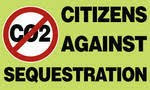
Citizens Against CO2 Sequestration - the grassroots movement in Darke County, Ohio is growing to send raise public awareness of the proposed large-scale CO2 sequestration EXPERIMENT planned for Darke County and the risks to their community.

Signs are going up all over the county.

Thank you to all who are showing your opposition to the EXPERIMENTAL CO2 Sequestration project planned for our community! Talk to your friends and neighbors, plan to attend The Stop CO2 Sequestration rally and our Call To Action Meeting on Monday, June 29, at the All Seasons Place on Sebring Warner Road at 7 PM.

A public Stop CO2 Sequestration Rally is planned for Saturday morning - June 27 - Annie Oakley Park in downtown Greenville at 10 am - more details coming soon. Signature Petitons, information will be available as well as Yard Signs. Yard Signs can be purchased for $5 each.
Plan to Attend - Homemade signs welcome.

Signs are available from Isabel Culbertson or by emailing - StopExperimentalCO2Projects@yahoo.com

Click on this link to read the article in The Daily Advocate and to access their CO2 blog.

If you know of other newspapers hosting their own blog about CO2 sequestration projects please let us know. To date, we believe The Daily Advocate in Greenville, Ohio is the only one.

Clean-coal test is a go in Ohio- and it will be in Greenville, OH

From the Columbus Dispatch - this large-scale CO2 project was announced to the public May 6, 2007 and Battelle was already onboard.........so the question is, when did that deal really begin?

Sen. George V. Voinovich, R-Ohio
announces Large Scale CO2 Project for Darke County


Clean-coal test is a go in Ohio
Feds' $61.1 million will pay to pump CO{-2} underground
Wednesday, May 7, 2008 3:15 AM
THE COLUMBUS DISPATCH


WASHINGTON -- The federal government said yesterday that it will spend $61.1 million for a clean-coal project in Ohio, a major step in deciding whether it is commercially feasible to burn Midwest coal without emitting the carbon dioxide thought to cause global warming.

The money will be funneled to a demonstration project in the Mount Simon Sandstone formation in Darke County in western Ohio.

About 1 million tons of carbon dioxide from an ethanol facility will be injected 3,000 feet into the sandstone formation.

Proponents contend that the process, known as carbon sequestration, is crucial for the future of Ohio coal. If electric utility plants can burn coal without causing global warming, it would provide a major boost to Ohio's coal industry.

Sen. George V. Voinovich, R-Ohio, said in a statement that "this award is a vitally important step forward in our nation's commitment to crafting a comprehensive solution to climate change."

To read the entire article click here


Midwest Regional Carbon Sequestration Partnership—Development Phase

http://www.netl.doe.gov/publications/factsheets/project/Proj599.pdf

Sunday, June 14, 2009

Briefing for the Public and Media Greenville, OhioMRCSP Phase III Geologic Test at the Andersons/Marathon Ethanol Plant

Briefing for the Public and Media
Greenville, Ohio
August 13, 2008

http://216.109.210.162/userdata/whatsnew/public_meeting_8-13-08.pdf

NETL Workshop of Gasification Technologies June 2008

Click here to be taken to the PowerPoint presentation

Carbon Sequestration: Risks, Opportunities, and Protection of Drinking Water

Statement by Ian Duncan
Bureau of Economic Geology
University of Texas at Austin
July 24, 2008
Regarding
Carbon Sequestration: Risks, Opportunities, and
Protection of Drinking Water

Cranfield Mississippi - Case Study: Monitoring an EOR Project to Document Sequestration Value

Slide 1
Large volume, Phase III via existing pipelines - EOR project

Click here to be taken to the PowerPoint

From the SECARB site: http://seesorg.org/Hill_10_15_part_1.pdf

The project will inject CO2 at the rate of one million tons per year, for up to 1.5 years, into brine up to 10,000 feet below the land surface near the Cranfield oil field about 15 miles east of Natchez, Miss. Experimental equipment will measure the ability of the subsurface to accept and retain CO2. The study will be supported by Denbury Resources’ CO2 enhanced oil recovery operations at Cranfield. Denbury Resources will supply CO2 from its Jackson Dome.

Class V Experimental Well Permit Process Items & Potential Issues for Western Kentucky CO2 Storage Project

From July 2008

http://www.uky.edu/KGS/kyccs/ppt/080724_wkydeep_sandia.pdf

The above presentation describes the Process for a Class V Experimental Well Permit scheduled for Western KY

Saturday, June 13, 2009

MRCSP Project- Greenville, Ohio - Darke County

To find the latest information regarding the Darke County (Greenville) project please continue to check The Daily Advocate CO2 blog. This is a special blog set up to keep residents informed.

http://blogville.dailyadvocate.com/co2/


The proposed seismic testing area can be found there - they have a map and have listed the streets and off-road areas involved.

A special thanks to The Daily Advocate for this service to your community.

Injection Induced Earthquakes AND Special Considerations Supercritical Liquid Properties

When most people think about Carbon Capture and Storage they think it means putting bubbles in the ground or carbonation, like we find in soda pop. The reality is not even close to anything resembling bubbles and it is dangerous.

Before the CO2 they capture can be put into the ground it must be transformed into SUPERCRITICAL CO2 which is considered a Supercritical Liquid - which is a supersolvent and comes with a lot of risks.

The article below comes from:
ISSUES RELATED TO SEISMIC ACTIVITY INDUCED BY THE INJECTION
OF CO2 IN DEEP SALINE AQUIFERS
Joel Sminchak and Neeraj Gupta

I could not find a date on this abstract. Some random quotes from it are listed below.

Please read the entire article - I have just excerpts here.

The live link to this article is here
(bold areas in the quoted material below have been done by me to help those who skim over articles)

Consequently, the injected CO2 must be addressed as a multiphase system. Special considerations for underground disposal of CO2 are mostly related to the unique properties of supercritical CO2.


"Formation Dissolution/Weakening
Supercritical CO2 has the potential to dissolve, weaken, or transform the minerals in the injection formation. In the supercritical state, CO2 becomes a “supersolvent.” Thus, there is potential for the fluid to dissolve and weaken the rocks in the injection formation. If the rock formation is weakened, the potential for hydraulic fracturing increases. Dissolution of minerals precipitated along a fault will reduce the strength of the fault, possibly moving the fault to frictional sliding conditions where failure is more likely to occur."

Case Study: Seismic Aspects of Deep Well Injection in Ohio
Deep well injection practices and seismic activity in Ohio were examined to determine the potential for induced seismicity in the state. All five active deep well injection systems in Ohio have been investigated for seismic hazards to some extent.
Most faults in Ohio are associated with Precambrian basement rocks at depths over 1 km below land surface. Several faults have been identified in northwestern Ohio, while relatively few faults have been identified in the rest of the state. The Anna Seismogenic Region is one of the most active seismic zones in Ohio (Figure 4). The zone is located in west-central Ohio. (Note by me - Greenville, OH is considered to be part of the Anna fault)

"In general, most seismic activity indicates strike-slip movement along steeply dipping faults. Based on the USGS Seismic Hazard mapping project, there is a low probability for damage from earthquakes for Ohio, except in the Anna Seismic Area, which has a moderate hazard.

The Anna Seismic Seismogenic Region in west-central Ohio has been identified as one of the most active seismic areas in the Midwest. The area has a substantial history of seismic activity dating back to the mid-1800s. The largest earthquake observed in the area had a Modified Mercalli intensity of VIII in 1937. In general, seismic activity indicates northeast-southwest strike-slip movement oriented perpendicular to the predominant stresses in the area."


"A number of faults have been proposed in the area, but most activity appears to occur near the trend of the proposed Anna-Champaign Fault. Overall, the Anna Seismic Area is considered a seismically active area."


Acknowledgement: The work presented here was conducted with funding from the U.S. Department of Energy’s National Energy Technology Laboratory as part of project number DEAF26-99FT0486."

To read the entire abstract click here